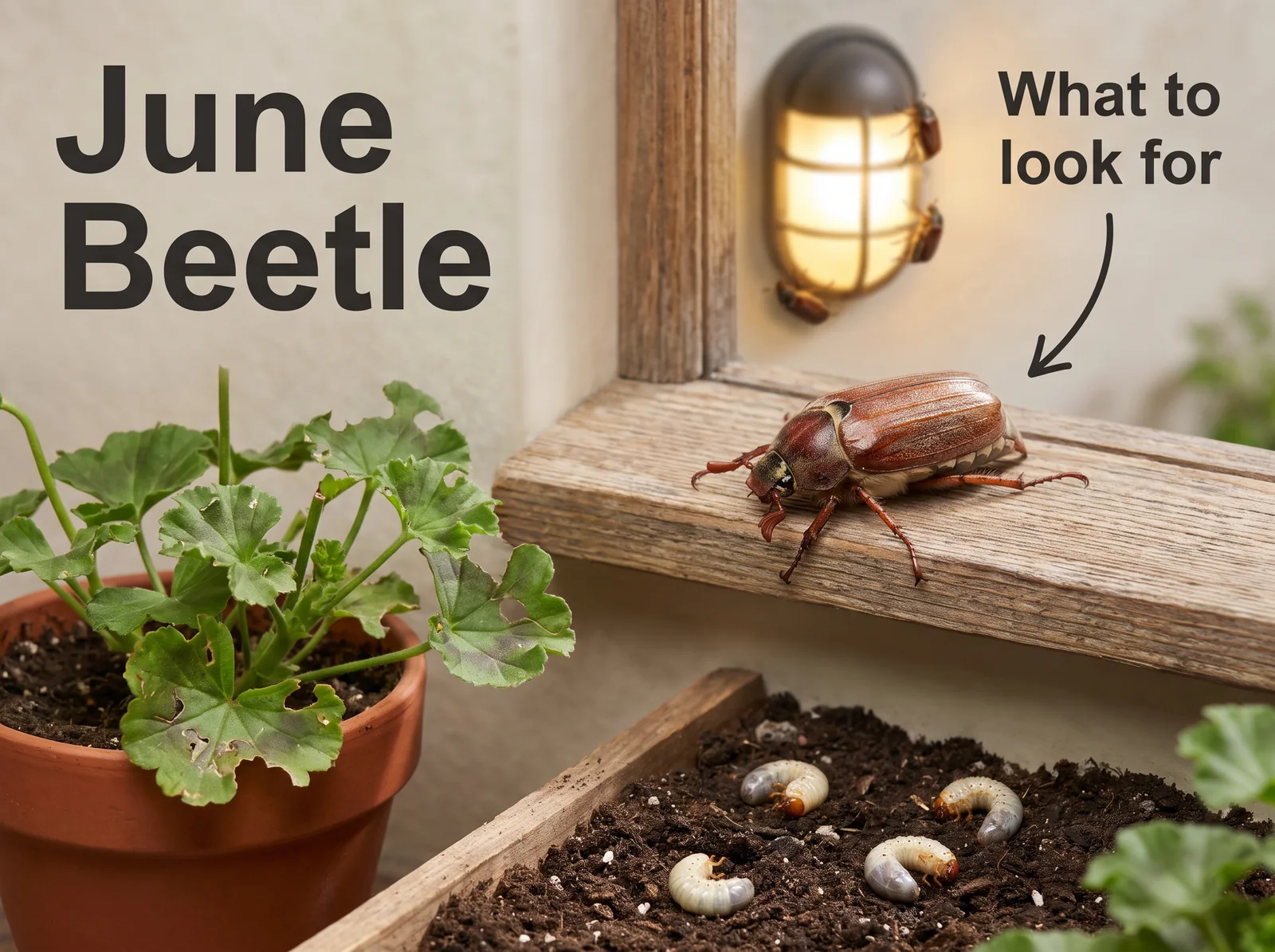
What do adult June beetles eat above ground?
Adult June beetles are nocturnal leaf feeders that emerge in late spring to search for food and mates. Once the sun sets, they fly to nearby trees and landscape shrubs to chew along the margins of leaves. They prefer broadleaf deciduous varieties, but they will also consume garden flowers, ripe fruits, and tender vegetable shoots when available.
Because these beetles feed at night, you might only notice the aftermath the next morning. Heavy feeding leaves foliage looking ragged, notched, or partially skeletonized. Individual adults rarely eat enough to kill an established mature tree, but large swarms can strip new shoots and weaken smaller garden plants over several weeks.
- Leaves of oak, elm, walnut, ash, and birch trees
- Landscape shrubs such as roses and lilacs
- Garden blooms, soft berries, and vegetable foliage
What do June beetle larvae eat underground?
The larval stage of the June beetle, commonly known as a white grub, lives beneath the soil surface and has a completely different diet from the adult beetle. Grubs feed aggressively on the fibrous roots of turfgrasses, pasture weeds, and garden crops. As they grow, their appetite expands, cutting off the plant's ability to take up water and soil nutrients.
Grub feeding is the primary cause of severe June beetle damage in residential yards. When root systems are severed just below the surface, the grass above turns yellow, wilts, and eventually dies in irregular patches. Healthy soil provides plenty of organic matter, but high grub populations will quickly devastate dense turf.
- Roots of Kentucky bluegrass, fescue, and Bermuda grass
- Underground root systems of corn, potatoes, and strawberries
- Decaying organic matter and tender weed roots
How does their diet change throughout the year?
The feeding habits of June beetles shift with the seasons and their multi-year life cycle. In early spring, overwintered grubs move upward through the warming soil profile to feed heavily on young turf roots before entering the pupal stage. This spring feeding window can cause sudden lawn decline just as your grass tries to green up.
By late May or June, adult beetles emerge from the soil to begin their brief foliar feeding and mating period, which lasts around one month. After females lay eggs back in the soil, the newly hatched grubs spend late summer and early autumn consuming turf roots before burrowing deep below the frost line to survive the winter.
Which garden plants and trees are most at risk?
While June beetles are opportunistic feeders, they show clear preferences for specific garden plants and tree species. Deciduous shade trees like oaks, maples, and fruit trees are frequent targets for adults during warm summer evenings. In the vegetable garden, leafy greens, bean plants, and ripening fruit can also suffer visible foliar loss.
Underneath the soil, newly planted vegetable seedlings, strawberry beds, and ornamental perennials are highly vulnerable to root-chewing grubs. Because these young plants have limited root mass compared to mature turf, even a small number of grubs feeding around the root ball can cause the plant to collapse and dry out quickly.
How can you tell June beetle feeding damage apart from other pests?
Identifying June beetle damage requires checking both the foliage above and the soil below. Adult feeding creates ragged, jagged holes along leaf edges, unlike the clean circular cuts made by leafcutter bees or the fine stippling left by spider mites. If you inspect your plants after dark with a flashlight, you will often find the beetles actively chewing on the foliage.
Grub damage in turf shows up as spongy, thinning lawn areas that pull up easily like a loose carpet because the roots are gone. Secondary signs include skunks, raccoons, or birds tearing up your sod to dig for the grubs. If you suspect an infestation, cut a one-square-foot section of sod and count the C-shaped grubs in the top three inches of soil.
How can you protect your yard without relying on heavy treatments?
Managing June beetle feeding starts with monitoring and habitat adjustments. Since adult beetles are strongly drawn to artificial lights, turning off outdoor fixtures or switching to warm yellow bug bulbs during peak flight weeks reduces the number of beetles landing on your nearby plants. Hand-picking adult beetles into a bucket of soapy water at night works well for small gardens.
For your lawn, maintaining thick, healthy turf with deep, infrequent watering encourages deeper root growth that can better tolerate minor grub feeding. Beneficial nematodes applied to moist soil in late summer target young grubs naturally before they cause extensive damage. If you ever need an EPA-registered pesticide, select one labeled for white grubs or foliage-feeding beetles and follow every label instruction.
Questions you may still have
Do June beetles bite people or eat indoor food?
June beetles do not bite, sting, or carry diseases, and they do not eat human food or pantry goods. Their mouthparts are built strictly for chewing plant foliage. If a June beetle flies into your home, it was likely attracted by indoor lighting and is simply looking for a way back outside toward vegetation.
Can June beetle grubs destroy a vegetable garden?
Yes, high populations of grubs can cause severe damage in vegetable gardens. They chew through the root systems of young seedlings, beans, and corn, and they will tunnel directly into root crops like potatoes, carrots, and sweet potatoes, leaving large gouges that ruin the harvest and invite fungal rot.
How many grubs per square foot cause visible turf damage?
A healthy, well-maintained lawn can usually support five to eight white grubs per square foot without showing signs of stress. However, when counts exceed ten grubs per square foot, root loss becomes severe enough to create dead brown patches, requiring active lawn repair and cultural management.