What attracts green June beetles to your yard?
Adult green June beetles are primarily drawn to decaying, sugary organic matter and rich garden soil. They love ripening or rotting thin-skinned fruits like peaches, figs, blackberries, and grapes. When fruit falls to the ground and starts fermenting, the sweet odor acts like a beacon for swarms of active adults.
Below the surface, female beetles seek out soil with high organic content to lay their eggs. Compost piles, heavily manured garden beds, and lawns with thick thatch layers provide ideal food for developing grubs. Understanding these two distinct attractants helps you target both the flying adults and the underground larvae.
How do you identify green June beetles and their grubs?
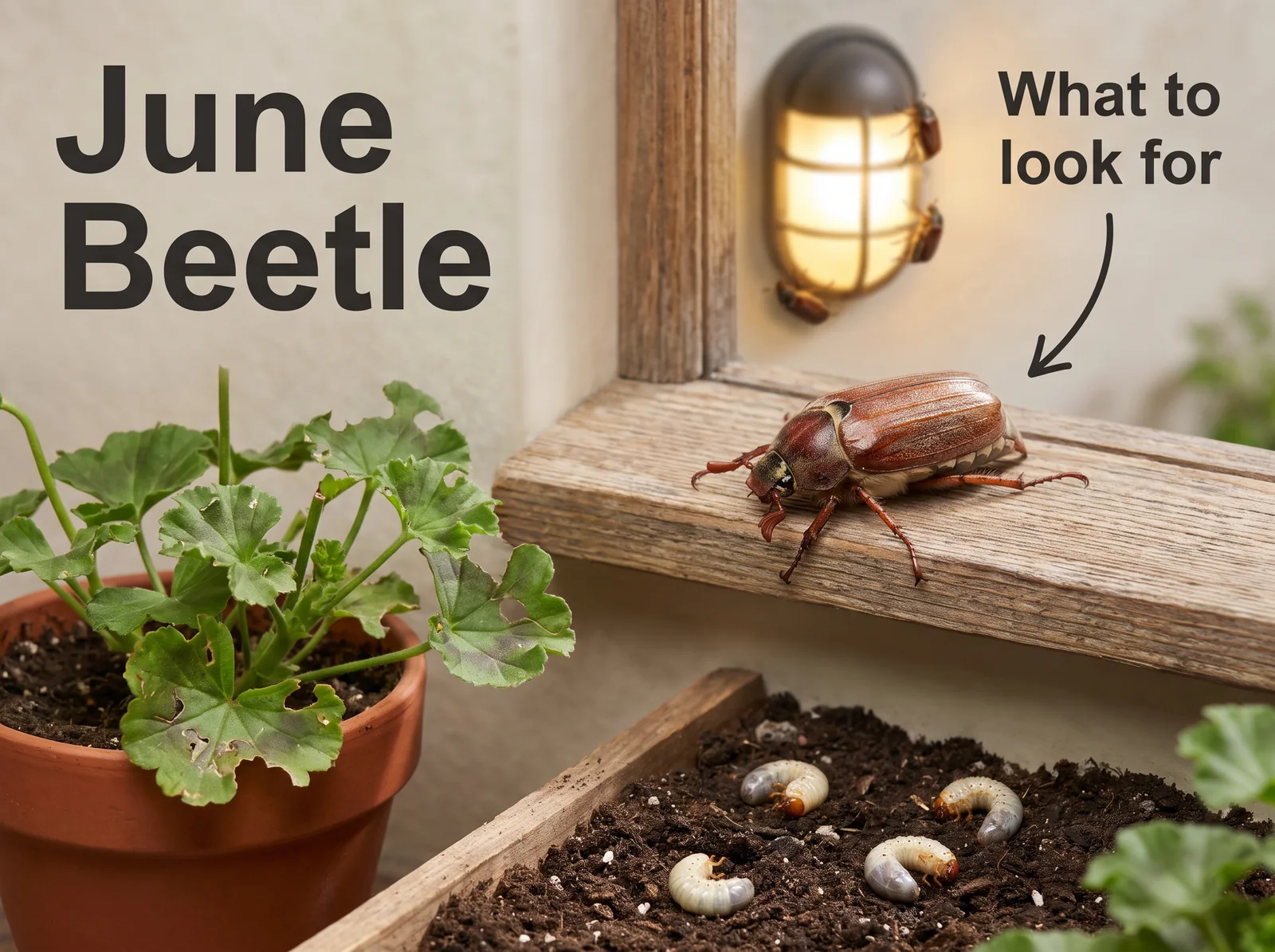
Adult green June beetles measure nearly an inch long with a velvety green back, bronze or yellow-tinted margins, and a shiny, metallic green-gold underside. They fly actively during bright daylight with a distinct, loud buzzing sound that often makes people mistake them for bumblebees or large hornets.
Their grubs also behave differently than other lawn pests. While most white grubs curl into a tight C-shape in the root zone, green June beetle grubs are known for crawling on their backs using stiff bristles along their spines. They tunnel near the surface, leaving small mounds of loosened soil and churning up turfgrass roots.
How can you protect your fruit trees and garden crops?
Because adults attack soft, ripe fruit, daily sanitation is your most effective defense in the orchard or vegetable patch. Harvest crops as soon as they ripen, and promptly pick up any windfalls or rotting fruit that drop to the ground. Removing the food scent stops beetles from congregating in large feeding groups.
For small berry patches or prize fruit clusters, fine insect netting works well to create a physical barrier. Secure the netting tightly around the base of branches or garden frames before the fruit begins to soften and color, ensuring beetles cannot slip underneath.
What are the best manual removal methods for adults?
Hand-picking is surprisingly effective for small garden spaces because these beetles are clumsy flyers when temperatures are lower. Early in the morning, when the air is cool and the insects are sluggish, walk through your garden and gently knock feeding beetles directly into a bucket filled with warm, soapy water.
You can also set up simple funnel traps near the perimeter of your garden using a mixture of water, overripe fruit, and a splash of yeast or fruit juice. Place traps several feet away from valuable plants so you draw the insects away from your harvest rather than toward it.
- Shake infested branches over an open bucket of soapy water at dawn.
- Hang baited collection jugs along outer fence lines to divert incoming swarms.
- Check compost heaps regularly where resting adults often gather during midday heat.
How do you manage green June beetle grubs in your lawn?
Controlling grubs beneath the turf prevents next season's adult population from emerging. Since grubs feed heavily on decomposing thatch and organic topsoil, dethatching your lawn in early spring or late summer reduces their primary food source. Regular core aeration also helps firm up loose soil and disrupts shallow tunnels.
Natural predators can assist your efforts significantly. Beneficial nematodes, which are microscopic roundworms applied through a garden sprayer onto moist soil, actively hunt and parasitize grubs underground. Apply them in late summer when young grubs hatch near the surface for maximum impact.
How does lawn maintenance reduce future infestations?
A dense, healthy turf canopy makes it much harder for adult females to burrow into the soil surface to deposit eggs. Maintain a mowing height of three to four inches during the summer months. Taller grass shades the soil, keeps root zones cool, and creates a dense physical barrier against egg-laying beetles.
Avoid applying fresh manure or uncomposted organic fertilizers directly to your lawn in early summer, as the odor attracts egg-laying adults. Instead, use finished compost or slow-release balanced nutrients, and water deeply but infrequently to encourage deep root growth rather than soggy surface soil.
When should you consider chemical controls?
Pesticides should be a last resort when manual removal, sanitation, and lawn care practices fail to prevent severe turf destruction. If you decide to treat, choose an EPA-registered product specifically labeled for green June beetles and your turf type, applying it strictly according to the manufacturer label.
Timing is essential for chemical treatments. Target late summer when newly hatched grubs are small, actively feeding, and close to the soil surface. Treating mature grubs in late spring or spraying adult beetles on ripe, edible fruit is rarely effective and carries unnecessary risks to beneficial pollinators.
Questions you may still have
Do green June beetles bite or sting people?
No, green June beetles do not bite, sting, or carry diseases. Although their large size and loud buzzing flight can be intimidating, their mouthparts are designed only for chewing soft, ripe fruit and plant sap. They are completely harmless to humans and household pets.
How are green June beetles different from Japanese beetles?
Green June beetles are roughly twice the size of Japanese beetles, measuring nearly an inch long. While Japanese beetles have shiny copper wing covers and skeletonize leaves, green June beetles are dull velvety green on top and focus their feeding primarily on soft, ripe fruit rather than foliage.
Why do green June beetle grubs crawl upside down?
Green June beetle grubs have very short legs compared to their heavy bodies, so they roll onto their backs and use stiff, bristle-like hairs along their spine to propel themselves across the ground and through loose surface soil. This unique crawling behavior easily distinguishes them from other lawn grubs.