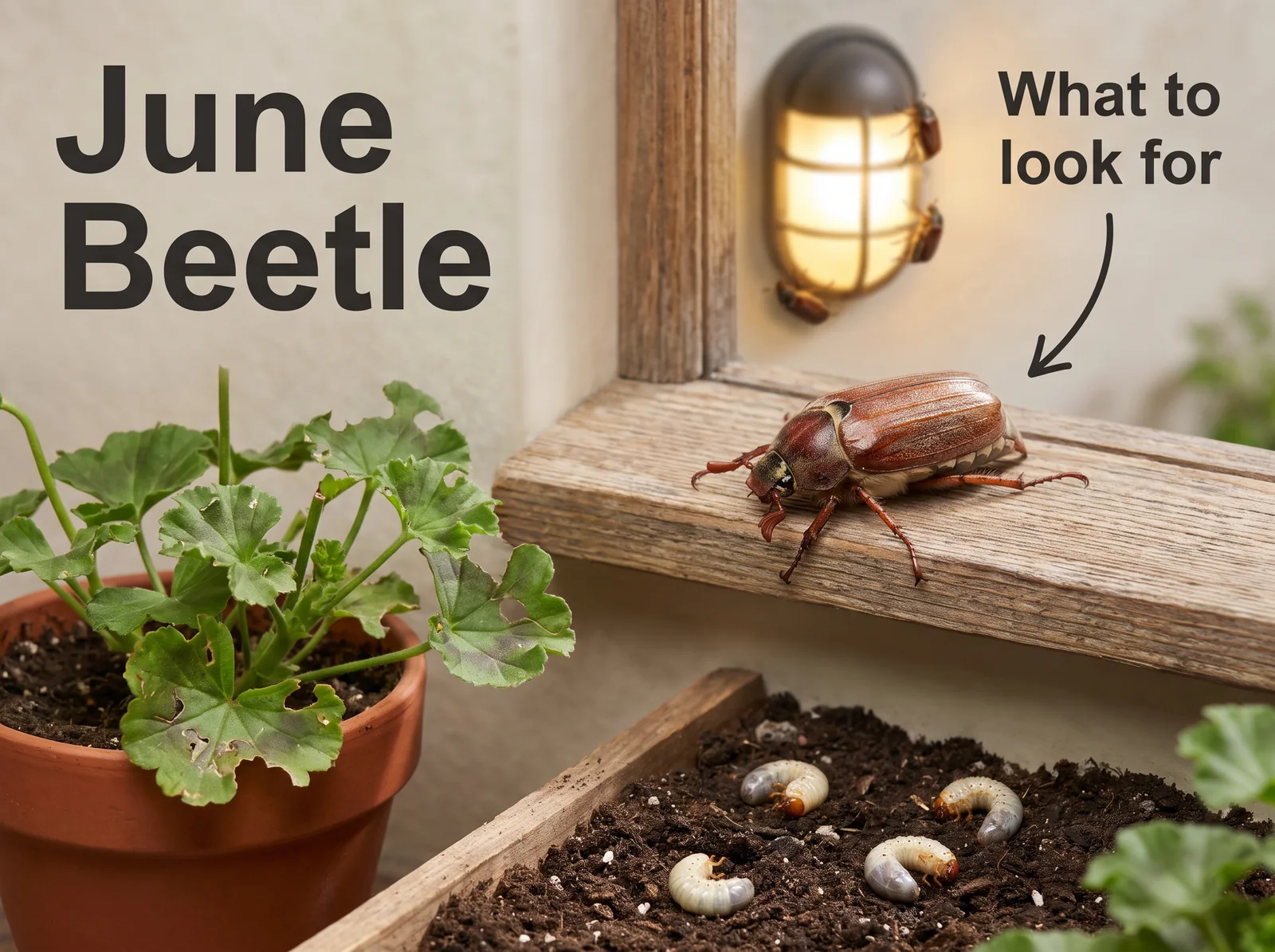
Why are june beetles getting inside your house?
June beetles spend most of their lives underground as white grubs feeding on turf roots. In late spring and early summer, adults emerge to mate and feed on tree foliage at night. They are strongly phototactic, which means bright artificial lighting pulls them off course.
When your exterior porch lights, patio bulbs, or bright indoor lamps shine through glass, beetles fly directly toward the glow. They collide with siding, drop onto doorsteps, and crawl through small gaps under exterior doors or damaged window screens while searching for the light source.
How do you remove live beetles from rooms right now?
Because these beetles are clumsy and slow on flat surfaces, you do not need harsh sprays to clear them out. Physical removal is the fastest and cleanest way to handle beetles wandering across walls, carpets, or curtains.
Pick them up with a paper towel or gently trap them under a drinking glass and slide a piece of stiff cardboard underneath. Release them outside far from your entryways, or drop them into a small bucket of soapy water if you want to dispose of them immediately.
- Invert an empty jar over the beetle on flat floors or walls.
- Slide a postcard under the opening to trap the insect safely.
- Vacuum up stray beetles with a hose attachment and empty the canister outdoors.
Which entry points should you inspect and seal?
A few minutes spent inspecting the perimeter of your home will stop future beetles from wandering inside. Focus on areas directly illuminated by your outdoor lighting fixtures.
Check window screens for small tears, loose spline cords, or warped frames that leave gaps along the track. Inspect the weatherstripping around exterior doors, especially along the threshold, where beetles often slip underneath after landing on your doorstep.
- Patch or replace torn mesh on windows and patio screen doors.
- Install tight-fitting door sweeps on all exterior entry doors.
- Seal gaps around outdoor light fixtures and utility pipes with exterior silicone caulk.
How does outdoor lighting affect indoor beetle problems?
Outdoor illumination is the primary reason beetles congregate around your entry points. Standard cool-white and bluish LED or incandescent bulbs emit wavelengths that june beetles detect from far away in your yard.
Switching outdoor fixtures to warm yellow bug lights significantly reduces nighttime attraction. You can also install motion sensors or timers so lights only turn on when necessary, keeping your doorways dark and uninviting during peak beetle flight hours in early summer.
Do june beetles damage household items or food?
Finding large beetles indoors can make you worry about your furniture, clothes, or kitchen cabinets. Fortunately, adult june beetles only feed on the leaves of deciduous trees and shrubs outdoors. They have no interest in fabrics, wood framing, or dry goods.
They cannot survive long in typical indoor environments due to dry air and a lack of host foliage. Any beetle that slips inside will perish on its own within a few days if you do not catch it first, leaving behind no hidden nest or indoor colony.
Should you apply pesticides inside your home?
Chemical sprays inside living spaces are unnecessary and ineffective for june beetles. Since the insects do not establish indoor populations, broadcast spraying baseboards or rooms exposes your household to chemicals without providing any real benefit.
If heavy outdoor beetle activity makes exclusion difficult, focus treatments strictly outside on the lawn where grubs develop. When using any pesticide, select only an EPA-registered product labeled for the target pest and site, and follow the complete manufacturer label carefully.
How do you handle beetles trapped in light fixtures?
June beetles frequently squeeze into semi-enclosed ceiling globes, recessed light housings, or exterior porch sconces. The heat from light bulbs quickly kills them, leaving unsightly debris that can scorch or smell over time.
Turn off the power switch, allow the fixture to cool completely, and remove the glass shade to dump out dead insects. Wipe the interior with a damp cloth and make sure the housing fits snugly against the ceiling or wall when reassembled to prevent new bugs from entering.
Questions you may still have
Can june beetles bite or sting pets and children?
No. June beetles do not possess stingers and their mouthparts are designed only for chewing plant leaves. They have small spines on their legs that help them cling to tree bark, which can feel slightly scratchy or sticky when crawling on human skin, but they are entirely harmless to you, your children, and your pets.
How long do adult june beetles remain active each year?
Adult june beetle activity is relatively brief, usually lasting between three and six weeks during late spring and early summer. Once the mating period concludes and females lay their eggs in outdoor soil, the adult population dies off naturally, ending the nuisance around your doors and windows until the following year.
Will a dehumidifier help stop june beetles inside?
A dehumidifier will not deter beetles from flying toward your lights, but dry air does speed up their natural mortality once inside. Lower humidity prevents moisture accumulation, ensuring any stray beetle that evades capture dries out and dies within one to two days rather than lingering in your home.