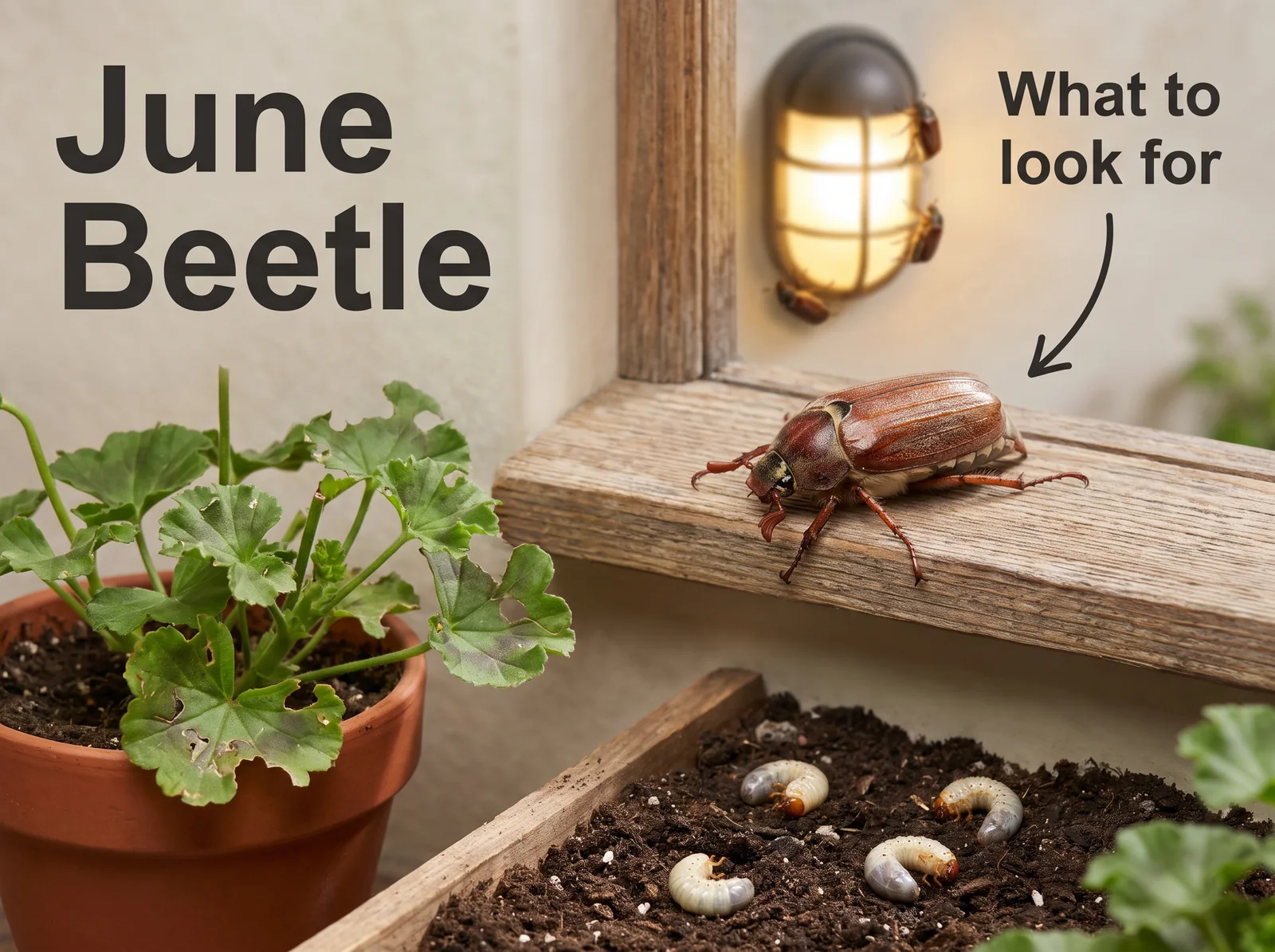
Why are june beetles gathering in your yard?
Adult june beetles emerge from the soil in late spring and early summer with two main goals: feeding and mating. Warm evening temperatures trigger their flight, and artificial lights pull them toward your patio, siding, and outdoor sitting areas. Once they land near your home, they stay close to easy food sources like tree foliage, roses, and ornamental shrubs.
Your lawn also plays a big part in attracting them. Adult females search for moist, healthy grass where they can burrow down and lay eggs. If your yard offers rich soil, dense turf roots, and bright exterior fixtures, it creates the ideal habitat for every stage of their life cycle.
- Bright outdoor fixtures that draw beetles from surrounding areas
- Overwatered lawn soil that offers ideal egg-laying conditions
- Abundant host plants like berry bushes, oaks, and garden flowers
How does outdoor lighting affect their activity?
Bright white and standard incandescent bulbs act like beacons for flying adult beetles. Once attracted to your fixtures, they bump into windows, drop onto decks, and settle into nearby landscape beds to mate and lay eggs. Managing this light is the fastest way to reduce adult numbers right away.
Switch your standard outdoor bulbs to warm yellow bug lights or motion-activated fixtures that only turn on when needed. You can also pull indoor curtains at dusk to block interior light from spilling into the yard. If beetles still swarm a specific area, move portable lighting fixtures farther out into the yard away from doors and outdoor seating.
What is the best way to remove adult beetles by hand?
Physical removal is surprisingly effective because adult june beetles are clumsy, slow fliers that are easy to catch after dark. Head outside about an hour after sunset with a flashlight to inspect your garden beds, shrubs, and window screens.
Carry a bucket filled with warm water and a small amount of liquid dish soap. Knock the beetles directly off leaves or screens into the soapy mixture with a gloved hand. The soap prevents them from climbing out or flying away. Checking your favorite plants two or three nights in a row during peak flight season quickly lowers the breeding population.
Can homemade light traps help reduce outdoor numbers?
If you want an unattended way to catch adults outside, a basic water trap works well overnight. Hang a low-voltage light or battery lantern directly over a wide, shallow tub of soapy water positioned away from your primary patio area.
The beetles fly toward the light, collide with the fixture or each other, and drop into the soapy water below. Empty the bucket each morning and refill it with clean soapy water before dusk. Set these traps along the perimeter of your yard so they draw insects away from your house rather than toward your back door.
How do you break the underground grub cycle?
Stopping adult beetles requires dealing with the grubs living in your soil. Female beetles deposit eggs two to five inches deep in the dirt during early summer. When the eggs hatch, the white, c-shaped grubs feed aggressively on turf roots, leaving spongy brown patches across your lawn by late summer.
Letting your lawn dry out slightly between waterings during peak egg-laying weeks creates an inhospitable environment for fragile new eggs. Keeping your grass cut to a taller height of three to four inches also shades the soil, discouraging females from burrowing into the turf to lay their clutches.
- Aerate compacted soil in autumn to disturb overwintering grubs
- Mow grass at three to four inches to build deeper, tougher roots
- Avoid daily shallow watering that keeps the topsoil constantly wet
Can biological controls keep outdoor populations down?
Introducing natural biological agents is a clean way to reduce beetle larvae before they grow into flying adults. Beneficial nematodes are microscopic organisms that you apply to moist lawn soil using a garden sprayer or hose attachment. They enter white grubs and eliminate them naturally without harming plants, earthworms, or pets.
Another long-term biological option is milky spore powder, a naturally occurring soil bacterium that targets specific beetle grubs. Once established in the dirt, these beneficial organisms multiply on their own and provide multi-year protection against new generations emerging on your property.
When should you consider outdoor lawn treatments?
If manual removal and biological controls fail to stop heavy turf damage, you may need a targeted outdoor lawn treatment. Timing is critical for these products; applying them when grubs are small and feeding near the surface in mid-to-late summer yields the best results.
Always choose an EPA-registered product specifically labeled for white grubs and outdoor turf application. Follow every instruction on the product label regarding watering, protective gear, and timing. If you are uncertain about the application window or extent of grub damage, a local lawn specialist can assess your turf.
Questions you may still have
Do adult june beetles bite or sting people?
June beetles do not possess stingers and lack mouthparts strong enough to bite humans or household pets. Their legs have tiny, sharp spines designed for clinging to tree bark and leaves, which can create a scratchy, clinging sensation when they land on your bare skin.
Which garden plants do adult june beetles damage most?
Adults feed primarily on the foliage of broadleaf deciduous trees, roses, raspberries, strawberries, and tender vegetable leaves. While minor chewing causes mostly aesthetic damage on mature trees, heavy clusters of beetles can defoliate young saplings and delicate garden crops over a few nights.
How do I know if dead lawn patches are caused by june beetle grubs?
Grab a handful of dead turf and pull straight up. If the grass rolls back easily like a loose carpet because the roots are gone, grubs are likely present. Dig a few small six-inch test holes in the soil beneath the dead patch to count how many white, c-shaped grubs you find.