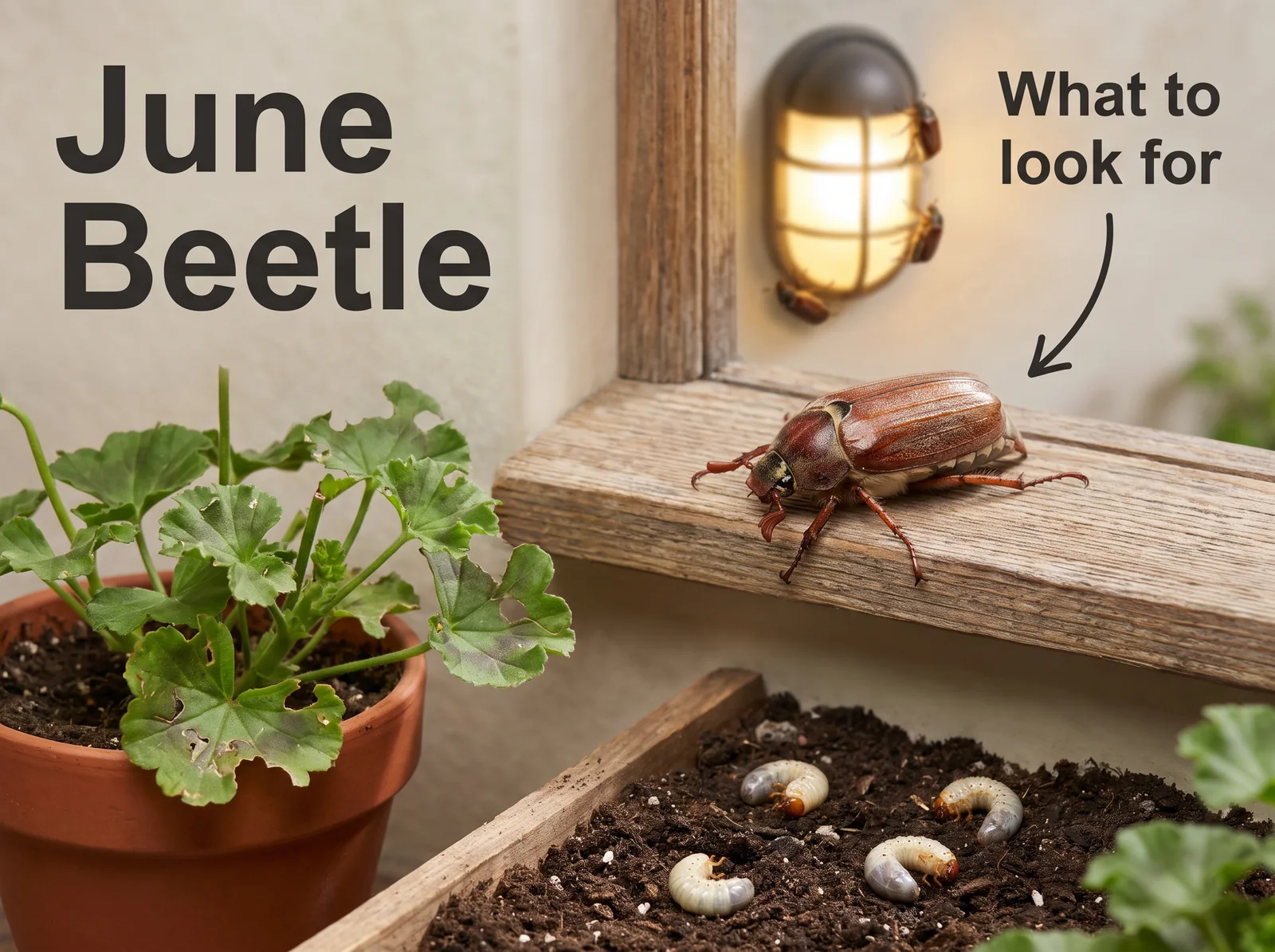
What attracts june beetles to your home and lawn?
Adult june beetles emerge from the soil in late spring and early summer. They are strongly drawn to bright artificial lights, which is why you often hear them bumping into window screens, glass patio doors, and porch fixtures after dusk.
Females look for thin, stressed, or overwatered turfgrass to lay their eggs. If your lawn has bare patches or short grass, adult beetles find it easy to dig into the soil and deposit eggs that hatch into root-eating grubs a few weeks later.
- Bright outdoor incandescent or LED porch lights
- Thin, closely mowed turfgrass with exposed soil
- Moist, overwatered garden beds and lawns during peak summer flight
How do you identify june beetles and their grubs?
Adult june beetles are heavy-bodied, oval insects measuring between one-half and one inch long. They range in color from reddish-brown to dark brown or metallic green, with prominent antennae and clumsy flight patterns in the dark.
Their larvae, commonly called white grubs, live underground. These grubs are c-shaped with cream-white bodies, brown heads, and six distinct legs near the front. If you notice soft, spongy lawn patches that lift up like loose carpet, grubs are likely feeding on the roots below.
How can you reduce adult june beetles around lights?
Managing adult beetles starts with changing how you use outdoor illumination. Because these insects navigate by ambient light, bright security fixtures pull them straight toward your house, where they gather on walls and doorways.
Switch bright white bulbs to warm yellow bug lights or motion-activated fixtures that stay off until needed. Drawing window blinds at night prevents indoor illumination from attracting swarms to your screens, which immediately lowers the number of beetles landing around entryways.
What simple physical methods remove adult beetles?
When adult beetles gather on porch screens, siding, or low shrubs, manual removal is fast and effective. Put on gardening gloves and drop the sluggish beetles directly into a bucket of warm water mixed with liquid dish soap.
You can also build a simple light trap by placing a container of soapy water beneath a low-hanging outdoor lamp. The beetles bump into the fixture and drop into the water, eliminating dozens of egg-laying females each evening without chemicals.
How does lawn care prevent grub infestations?
A dense, vigorous lawn creates a natural physical barrier that stops female beetles from easily reaching the soil surface. Set your mower deck to three or four inches tall during early summer so dense grass blades shade the ground.
Avoid overwatering your lawn during June and July when adult beetles are actively laying eggs. Dry topsoil discourages females from burrowing and can dry out young eggs before they hatch, significantly lowering next season's grub population.
- Mow grass at a height of 3 to 4 inches during peak flight season
- Aerate compacted soil in autumn to promote deep root growth
- Water deeply once a week instead of giving frequent shallow sprinkles
Which natural predators help control june beetles?
Encouraging natural wildlife helps keep beetle populations balanced. Insect-eating birds, toads, bats, and beneficial ground beetles hunt adult june beetles during their active nocturnal hours, thinning numbers naturally.
Beneath the surface, microscopic beneficial nematodes can be applied to moist soil in late summer. These microscopic organisms seek out and eliminate developing white grubs without harming earthworms, pets, or non-target garden insects.
When should you consider chemical controls for grubs?
Chemical treatments are rarely necessary unless an inspection reveals more than five to ten grubs per square foot along with visible turf dieback. Random applications without checking the soil waste money and can harm beneficial organisms.
If you choose a pesticide, use only an EPA-registered product labeled for your target pest and application site. Follow the complete product label for proper timing, usually targeting small, newly hatched grubs in late summer rather than fully grown spring grubs.
Questions you may still have
Do adult june beetles bite or sting humans?
June beetles do not bite, sting, or carry diseases. They possess small spines on their legs that can feel prickly or cling to clothing when they land on you, but they are completely harmless to people and household pets.
What is the best time of year to treat for lawn grubs?
Late summer to early fall is the most effective window for grub treatments. At this time, young grubs are small, actively feeding near the soil surface, and highly vulnerable to biological controls or labeled soil treatments.
Why are animals digging small holes across my lawn?
Skunks, raccoons, birds, and armadillos frequently dig up turf to search for june beetle grubs. If you notice disturbed sod and conical holes in late summer, check underneath the grass to confirm grub presence before deciding on treatment.