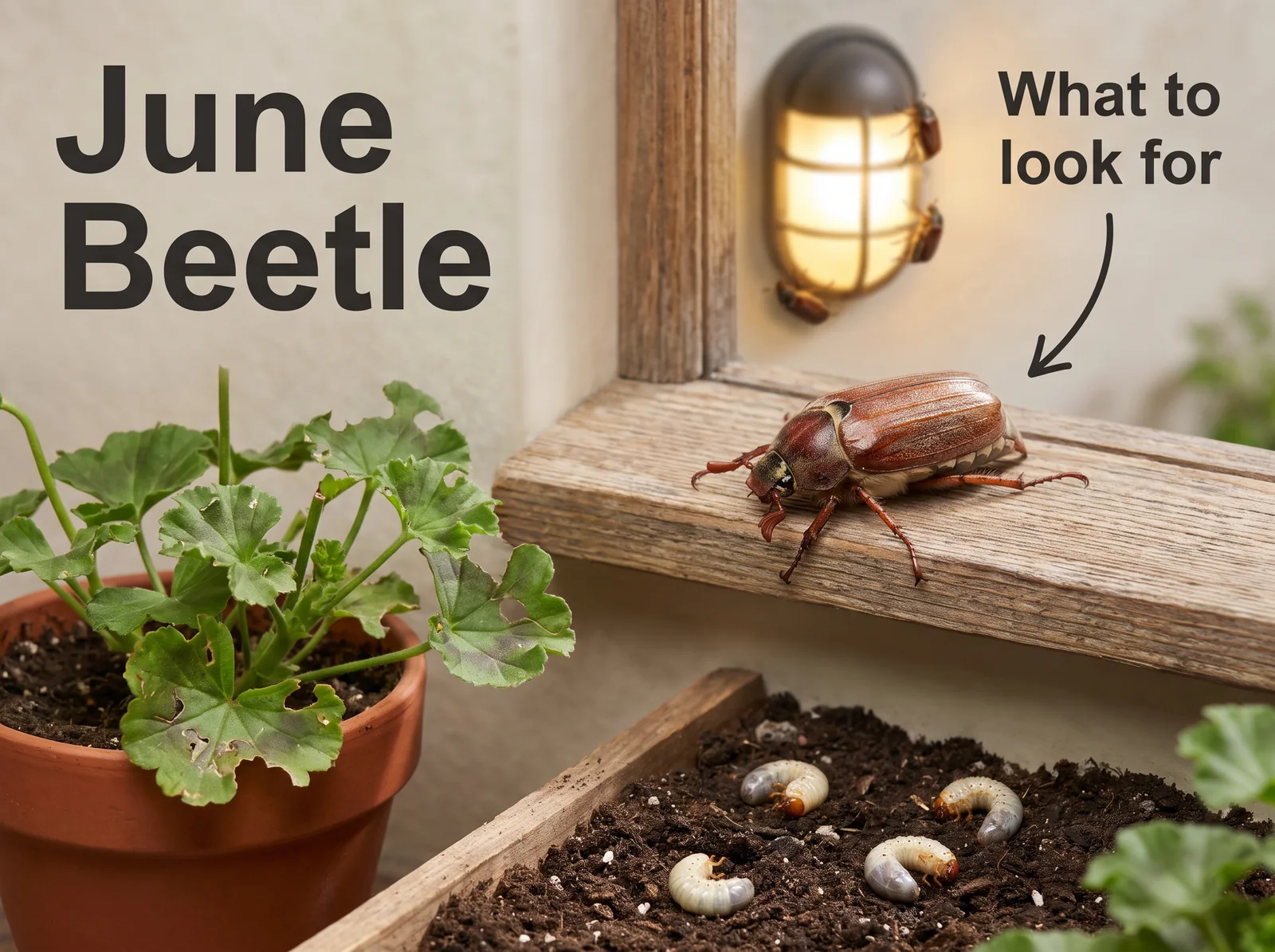
Why are june beetles invading your lawn?
Adult june beetles emerge from the soil in late spring and early summer to mate and feed on broadleaf trees, shrubs, and garden crops. They are strongly drawn to exterior lighting, which pulls them directly toward your patio, porch, and siding. Once the females settle in your yard, they burrow back down into the turf to lay dozens of eggs.
A stressed or thin lawn offers ideal conditions for egg-laying. The resulting white grubs chew through grass roots just below the surface, leaving turf unable to absorb water or nutrients. Recognizing this two-stage life cycle helps you target the pest at its most vulnerable moments.
How can you tell if grubs are damaging your turf?
Adult beetles cause visible chewing damage on tree leaves and ornamentals, but underground grubs create the most serious problems in your yard. During late summer and early autumn, grubs feed heavily near the root zone. You might notice irregular brown patches that fail to green up even with regular watering.
In severe cases, the turf feels spongy underfoot and rolls back easily like a loose carpet because the roots are completely severed. An influx of digging animals like raccoons, skunks, or birds is another clear sign that your soil contains a dense population of grubs.
What lighting adjustments keep adult beetles away?
June beetles are nocturnal and use light sources for navigation. Standard white incandescent or bright LED bulbs draw swarms of beetles straight toward your outdoor living spaces each evening. Reducing this light footprint is one of the simplest non-chemical ways to protect your yard.
Switch your exterior fixtures to warm-toned yellow bug lights or motion-activated sensors that only turn on when needed. Close curtains or blinds at night to keep indoor illumination from spilling into the garden. These minor changes discourage adults from congregating and laying eggs in your soil.
Can physical removal and traps reduce yard numbers?
Hand-picking is surprisingly effective for small yards and valuable garden plants. Head outside at dusk with a flashlight and a bucket filled with warm, soapy water. Shake the beetles off branches and drop them into the bucket, where the soapy water prevents them from flying away.
You can also set up light traps away from your outdoor seating and prized landscaping. Place a warm light over a container of soapy water along the edge of your property. The beetles fly toward the light, collide with the fixture or backing board, and drop into the water before they can mate.
How does lawn maintenance prevent beetle infestations?
A thick, robust lawn is your primary defense against beetle egg-laying. Adult females prefer thin, patchy turf with easy access to soil. Raise your lawn mower blade to keep grass at a height of three to four inches. Taller grass shades the ground, deepens root systems, and creates a physical barrier that deters beetles.
Aerate compacted soil in spring or autumn to improve drainage and root penetration. Avoid over-watering your yard during the peak egg-laying period in midsummer, as female beetles look for moist soil to ensure their eggs survive. Allowing the top layer of soil to dry between waterings reduces egg viability.
Are beneficial nematodes effective in the yard?
Beneficial nematodes are microscopic roundworms that hunt down white grubs in the soil without harming plants, earthworms, pets, or people. Heterorhabditis bacteriophora is a common species that actively seeks out and parasitizes soil-dwelling beetle larvae.
Apply nematodes in late summer or early autumn when young grubs are actively feeding near the soil surface. Water your lawn thoroughly before and after application to help the nematodes travel through the root zone. Apply them on an overcast day or in the evening to protect them from drying out and direct sunlight.
When should you consider chemical controls?
If non-chemical methods fail and grub sampling reveals more than five to ten grubs per square foot, targeted chemical applications may be warranted. Chemical controls are most effective against newly hatched grubs in mid to late summer rather than fully grown grubs in spring.
Always choose an EPA-registered product specifically labeled for white grubs and lawn application. Read and follow the entire product label, paying strict attention to watering requirements, application timing, and safety precautions for children, pets, and non-target beneficial insects.
Questions you may still have
How deep do you need to dig to check for grubs?
Cut a one-square-foot flap of sod about two to three inches deep in several problem areas of your yard. Peel the turf back and sift through the top few inches of topsoil and root mass. Count the C-shaped white grubs you see; finding fewer than five per square foot generally means your lawn can recover without aggressive intervention.
Do adult june beetles bite or sting people?
June beetles do not bite, sting, or carry diseases harmful to humans or pets. Their legs have tiny spines that help them cling to bark and leaves, which can feel prickly or clingy when they land on your skin or clothes, but they are completely harmless to touch.
Will milky spore eliminate june beetle grubs?
Milky spore is a natural bacterium specifically developed to control Japanese beetle grubs and does not reliably control common june beetle larvae. For broad-spectrum biological control against june beetle grubs, beneficial nematodes or targeted soil treatments are far more effective.