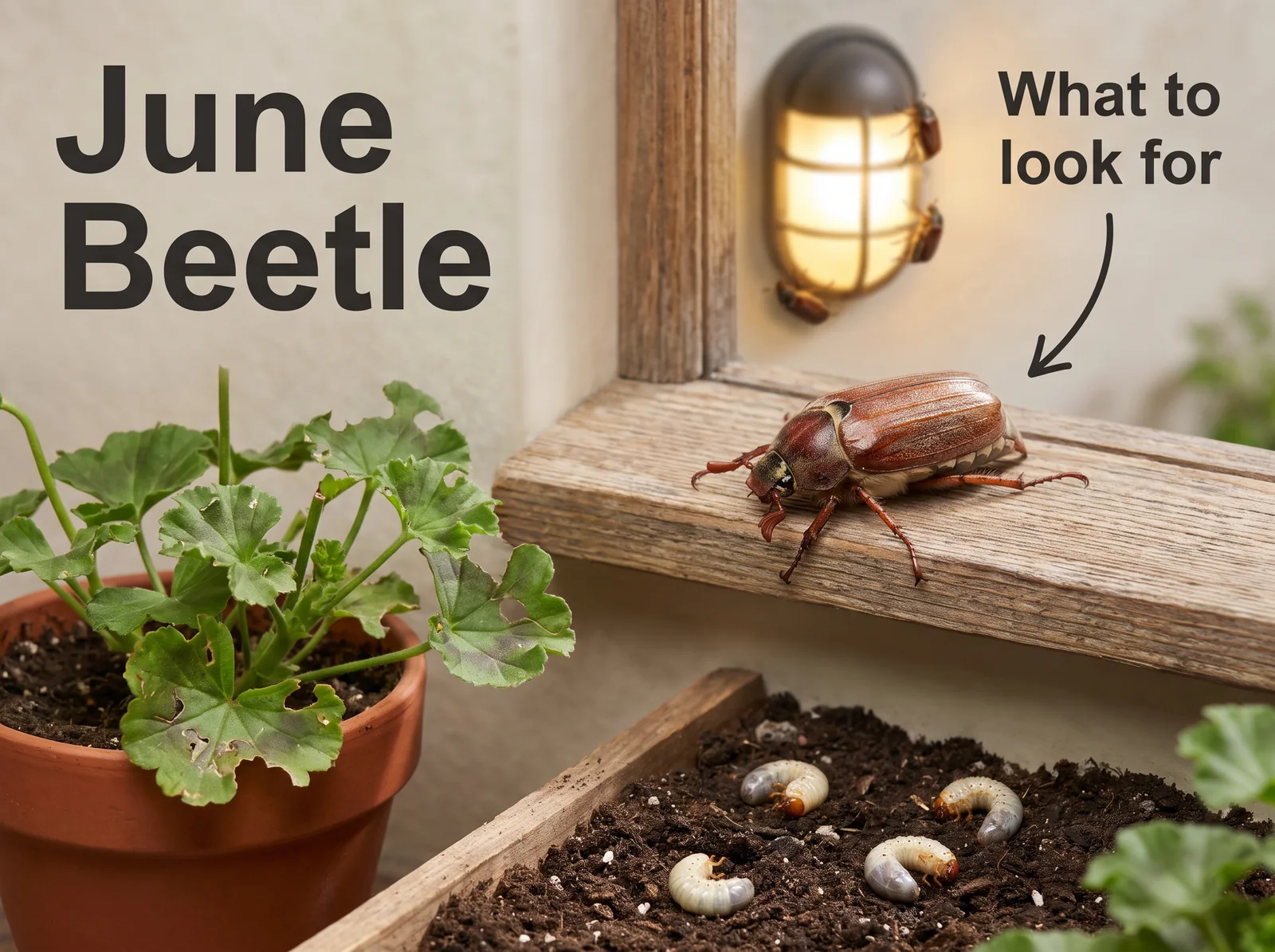
How do you identify green June beetles in your grass?
Green June beetles are unmistakable once you spot them in flight. Adults grow up to an inch long and feature a velvety metallic green shell with bronze or golden edges. They make a loud, clumsy buzzing sound as they fly around trees and shrubbery in bright daylight, often bumping into windows and patio screens.
Their larvae, known as white grubs, live beneath the turf. These grubs have a unique habit of crawling on their backs with their legs pointed up in the air when exposed. If you peel back loose patches of turf in late summer and find thick, C-shaped grubs churning up the topsoil, green June beetles are establishing themselves in your lawn.
- Adults measure three-quarters to one inch long with vibrant green shells.
- Flight activity peaks during midday heat rather than at dusk.
- Grubs crawl upside down on their backs through soil and thatch.
Why are green June beetles attracted to your yard?
Adult green June beetles have a strong sense of smell and seek out fermenting sugars and moist organic waste. If your yard has fruit trees with fallen peaches, berries, or apples, beetles will gather quickly to feed. They also love soft tree sap, sweet corn silk, and thick, decaying bark mulch beds.
Female beetles prefer laying eggs in soil rich in manure, compost, or excessive thatch. Lawns that receive heavy top-dressings of uncomposted manure or have poorly drained organic soil create prime nesting grounds. Once females lay eggs in these spots, grubs hatch and feed on organic particles and grass roots throughout the season.
- Overripe or dropped fruit fermenting on the ground.
- Thick mulch beds, compost heaps, and animal manure.
- Heavy lawn thatch that holds warmth and humidity.
What sanitation steps stop adult beetles from gathering?
Sanitation is your first line of defense against adult swarms. Walk your property daily during midsummer to gather and dispose of fallen fruit before it starts to rot. Pick ripe tomatoes, figs, and stone fruits immediately so beetles do not establish an active feeding station in your garden.
Turn compost piles frequently to speed up breakdown and keep the surface dry. Avoid using fresh animal manure as a garden fertilizer during peak summer months, as the smell draws egg-laying females from neighboring properties. Covering small fruit bushes with fine mesh netting provides a physical barrier that keeps beetles away from vulnerable crops.
- Collect fallen fruit and bruised garden vegetables every morning.
- Cover vulnerable berry patches with lightweight insect netting.
- Keep compost piles aerated, covered, and away from main turf areas.
How does lawn care reduce green June beetle grubs?
Healthy turf maintenance makes your lawn unappealing to egg-laying beetles and less hospitable to young grubs. Dethatch your lawn in early spring or autumn to reduce the spongy layer where grubs thrive. Aerating compacted soil improves drainage and helps beneficial soil organisms outcompete pest larvae.
Mow your grass at a higher setting during the summer, keeping blades around three to four inches tall. Taller grass develops deeper root systems that withstand moderate grub activity without turning brown. Deep, infrequent watering encourages strong roots, while overwatering creates the soft, soggy soil conditions that adult beetles seek for laying eggs.
- Core aerate in autumn to relieve soil compaction.
- Dethatch lawns when organic layers exceed one-half inch.
- Mow at three to four inches to build tough root structures.
Can biological controls help eliminate beetle grubs?
Biological controls offer an effective way to target grubs in the soil without harming pollinators. Beneficial nematodes, specifically species that target scarab larvae, can be applied to moist soil in late summer when young grubs are feeding near the surface. These microscopic organisms seek out grubs and neutralize them naturally.
Another natural option is milky spore powder, which infects beetle larvae and builds long-term protection in the soil. While milky spore takes time to establish, it persists for years once active. Always apply biological treatments during overcast days or early evening, and water the lawn immediately afterward to wash the organisms down into the root zone.
- Apply beneficial nematodes when soil temperatures are warm.
- Water turf thoroughly before and after applying biological agents.
- Encourage natural predators like birds to forage across your lawn.
When should you consider applying chemical controls?
If grub populations exceed ten to twelve per square foot and cause visible dead patches across your turf, chemical options may be necessary. The most effective window for treating grubs is late summer to early autumn, when the newly hatched larvae are small and active near the soil surface.
Always choose an EPA-registered product explicitly labeled for white grubs in residential lawns. Read and follow the product label instructions precisely, including requirements for post-application watering. Avoid blanket treatments across healthy sections of grass, focusing instead on heavily infested zones to minimize impact on non-target insects.
- Confirm grub presence by cutting and lifting a sample square of turf.
- Treat in late summer when larvae are small and close to the surface.
- Follow label directions for watering in granules or liquid applications.
How do you monitor your yard to prevent future infestations?
Preventing future outbreaks requires consistent monitoring from late spring through early autumn. Watch for adult flight patterns around tree canopies and gardens starting in June. If you notice heavy daytime activity, inspect your garden beds and fruit trees for feeding damage.
In late August, perform a quick spade test in thin or spongy lawn areas. Dig up a one-square-foot patch of turf three inches deep and sift through the soil. Counting the grubs gives you an accurate assessment of whether your cultural practices are working or if targeted intervention is required before winter sets in.
- Conduct square-foot soil inspections every August.
- Track adult beetle flight activity during warm, sunny afternoons.
- Adjust watering and fertilizing schedules based on yearly grub counts.
Questions you may still have
Do green June beetles bite or sting humans?
No, green June beetles do not bite, sting, or carry diseases harmful to humans or household pets. While their large size and loud buzzing flight can be startling, their mouthparts are designed only for chewing soft plant tissues, ripe fruit, and tree sap. They may accidentally cling to clothing with their spiny legs, but they cause no physical harm.
How do green June beetle grubs differ from regular lawn grubs?
Green June beetle grubs are noticeably larger than standard masked chafer or Japanese beetle grubs, often reaching two inches in length. They also exhibit a distinct locomotion habit: when placed on a flat surface, they flip over and crawl rapidly on their backs using stiff bristles along their body rather than walking on their tiny legs.
Will beetle traps solve a green June beetle problem in my yard?
Traps using sweet scents or pheromones generally attract more beetles into your yard than they capture. While they may catch high numbers of flying adults, they often draw pests from neighboring properties directly toward your garden. Improving lawn drainage, eliminating fallen fruit, and treating soil grubs provide far more reliable long-term control.