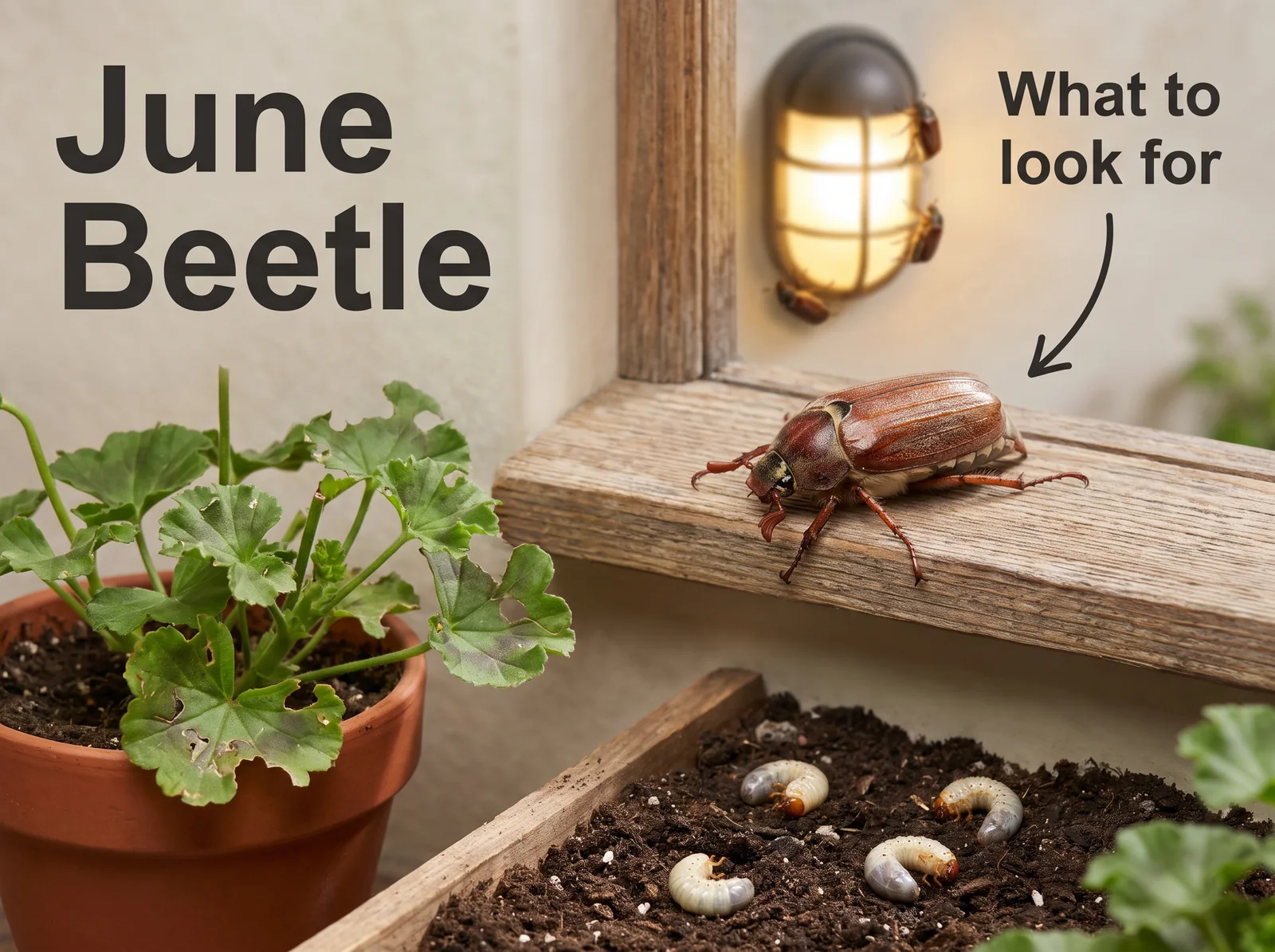
How do you spot june beetle damage in your garden?
June beetles damage your garden in two distinct phases of their life cycle. Adult beetles emerge in late spring and early summer, chewing large, irregular holes in the leaves of berry bushes, fruit trees, and tender vegetable plants. They feed mostly at night, leaving stripped stems and ragged foliage behind by morning.
The underground white grubs cause even more severe harm to garden crops. They chew through the roots of root vegetables, strawberries, and young seedlings. If your vegetable plants suddenly wilt during sunny days despite moist soil, or if young transplants pull up easily with severed roots, grubs are likely feeding below.
- Ragged, skeletonized foliage on vegetable crops and fruit trees
- Seedlings collapsing suddenly with chewed taproots
- Root vegetables like carrots and potatoes showing deep gouges at harvest
- Spongy, loose garden soil where pests have disrupted root systems
What is the best way to handpick adult beetles?
Handpicking is an easy, highly effective method for small to medium vegetable patches. Because june beetles become active at dusk and move sluggishly in cool evening temperatures, you can collect large numbers in a few minutes with minimal effort.
Take a flashlight and a bucket filled with warm water and a few drops of liquid dish soap into the garden after sunset. Check the tops and undersides of leaves on preferred plants. Shake the beetles off branches or pluck them by hand directly into the soapy water, which quickly drowns them.
How can physical row covers protect garden crops?
Physical exclusion keeps adult beetles from landing on your crops, feeding on foliage, and laying eggs in your garden soil. Lightweight floating row covers made of spun fabric create an impenetrable barrier while still allowing sunlight, air, and water to reach your vegetables.
Drape the fabric loosely over garden beds right after planting spring crops or before adult beetle flight periods begin. Secure all edges firmly with soil, stones, or landscape pins so beetles cannot crawl underneath. Remember to lift covers temporarily on flowering fruiting crops like squash if they require insect pollination.
How does soil cultivation reduce grub populations?
Tilling or turning your garden beds by hand exposes resting grubs to elements and predators. In early spring before you plant, and again in late autumn after harvest, use a garden fork or spade to turn the top four to six inches of soil.
This disruption brings grubs to the surface where foraging songbirds, toads, and ground beetles can eat them. Solar exposure and dry air also quickly desiccate any exposed larvae. Handpick and destroy any large white grubs you spot while working compost or soil amendments into your planting beds.
Which biological controls help keep grubs in check?
Beneficial nematodes are microscopic organisms that seek out and eliminate grubs in garden soil without harming earthworms, plants, pets, or people. Applying insect-parasitic nematodes, specifically species adapted to white grubs, provides reliable seasonal reduction in soil pests.
Apply nematodes in late summer or early fall when young grubs are actively feeding near the soil surface. Water your garden thoroughly before and after application, and apply during overcast days or in the evening to protect the living organisms from drying out and direct ultraviolet light.
How does lighting affect garden beetle activity?
Adult june beetles possess a strong attraction to artificial outdoor lighting. Bright porch lights, floodlights, and landscape fixtures near your garden act like beacons, drawing dozens of mating beetles directly to your property each night.
Turn off unnecessary exterior lights during peak beetle flight weeks in late spring and early summer. If you need outdoor illumination for safety, replace bright white or blue-toned bulbs with yellow insect lights or warm-spectrum LED bulbs, which are far less visible and attractive to night-flying beetles.
When should you consider registered garden treatments?
If grub populations are destroying entire planting beds despite cultural methods, a targeted garden treatment may help reset the space. Always choose an EPA-registered product specifically labeled for vegetable gardens and white grubs, ensuring it is safe for edible crops.
Follow all product label directions carefully regarding application timing, safety intervals, and harvest wait times. Avoid broad-spectrum sprays that drift onto flowering plants, as they harm vital pollinators and beneficial predatory insects that naturally manage garden pests for you.
Questions you may still have
Do june beetle grubs eat earthworms or damage compost piles?
No, june beetle grubs do not consume earthworms. They feed strictly on living plant roots and decomposing organic material in soil. However, if you find grubs living inside your finished compost pile, sift the material before adding it to garden beds to avoid accidentally transplanting root-chewing pests near your crops.
Can companion planting deter june beetles from the garden?
While companion planting does not provide a complete cure, interplanting strong-smelling herbs like rosemary, garlic, and mint can help mask the scent of favored garden vegetables. Growing these herbs around garden perimeters helps confuse foraging adult beetles while attracting beneficial parasitic wasps that naturally attack grub populations.
Will watering less often help reduce june beetle problems in garden soil?
Yes, letting the top inch of garden soil dry slightly between deep waterings can discourage adult females from laying eggs, as they prefer moist, soft soil for egg survival. Deep, infrequent watering keeps vegetable roots healthy while creating less hospitable surface conditions for newly hatched grubs.