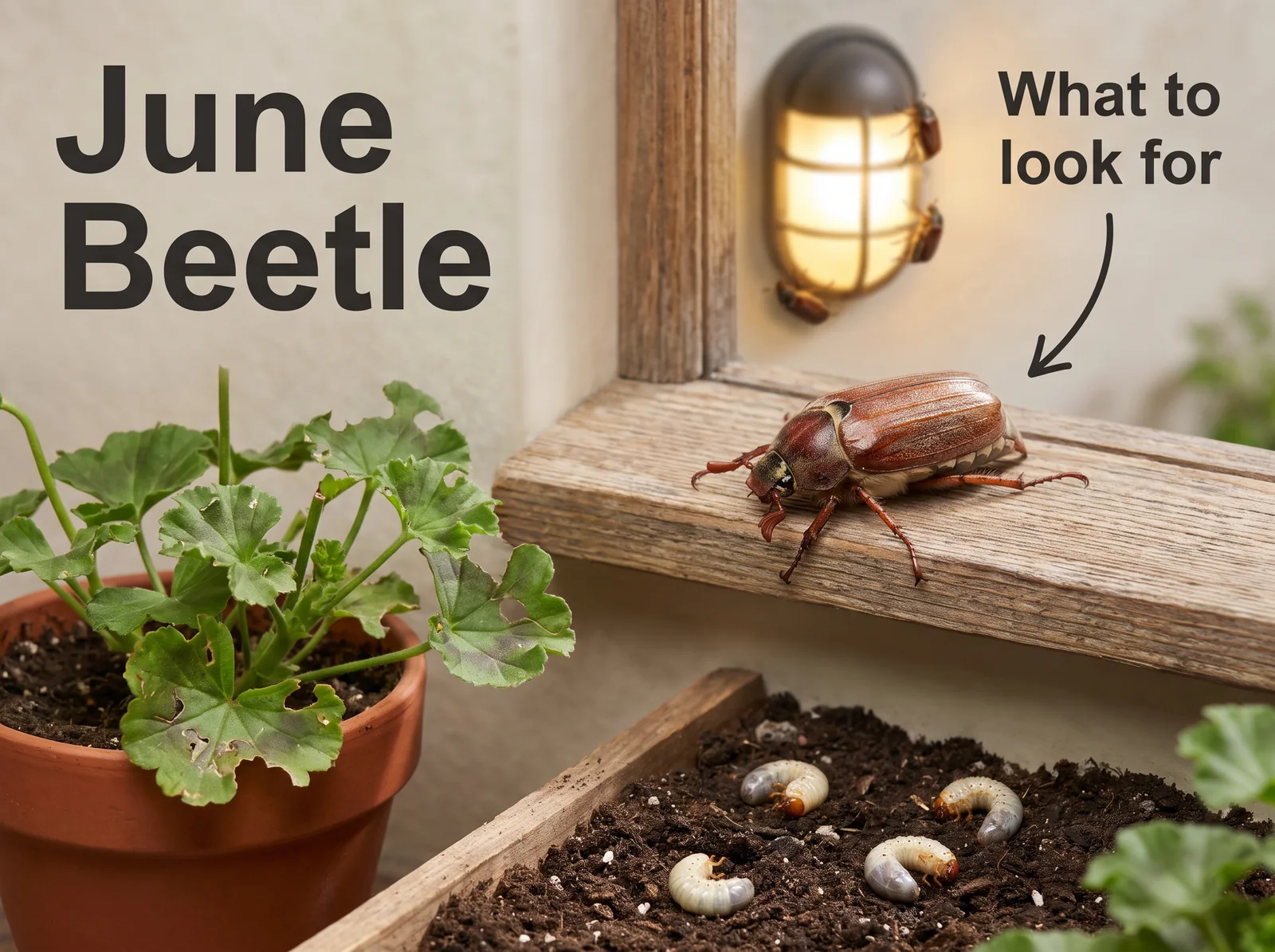
What attracts green June beetles to your garden?
Green June beetles are drawn to gardens that offer abundant food and rich soil. Unlike common brown chafers that feed on tree leaves at night, adult green June beetles fly during bright daylight hours. They have mouthparts built for soft materials, so they seek out thin-skinned, ripening, or overripe fruits.
Your soil conditions also play a massive role in attracting these pests. Female beetles look for loose garden beds, thick layers of mulch, manure, or active compost heaps to lay their eggs. Rich organic matter provides the ideal food supply for their developing grubs throughout the late summer and fall.
- Sweet, fermenting fruits like peaches, berries, figs, and grapes
- Open, unmanaged compost piles containing kitchen scraps
- Heavy applications of un-composted animal manure
- Loose, highly organic soil topped with thick organic mulches
How do you identify green June beetle damage?
Adult beetles cause noticeable damage to soft-skinned produce. They gouge into ripe fruit surfaces, opening deep wounds and feeding in clusters. Once the outer skin breaks, secondary pests and fungal rots quickly enter, ruining the remaining harvest on tomatoes, berries, and stone fruits.
Grub damage looks different because the larvae feed primarily on decaying organic matter rather than live plant roots. However, as large grubs tunnel near the surface, they churn up the soil, creating raised ridges and small mounds that dislodge young seedlings and dry out plant root systems.
Can you remove adult beetles by hand?
Handpicking is one of the quickest ways to reduce adult populations on garden plants. Green June beetles are large, slow, and clumsy fliers during the early morning hours when temperatures are still cool. Visiting your garden at dawn makes them easy targets for direct removal.
Carry a bucket filled with warm water and a few drops of liquid dish soap through your rows. Shake the infested plant branches or pick the beetles off directly by hand, dropping them into the soapy water. The soap breaks the surface tension, causing the beetles to sink quickly.
How do physical barriers protect garden crops?
Physical exclusion prevents adult beetles from ever reaching your prized harvest. Because these insects fly during sunny days and rely on visual cues and scent, covering your plants breaks their access entirely without interfering with normal plant growth or soil balance.
Drape fine insect netting or lightweight floating row covers over berry bushes, grapevines, and dwarf fruit trees just as the fruit begins to change color. Secure the edges firmly to the ground with garden staples or soil so the beetles cannot crawl underneath the mesh.
- Install fine mesh netting over berries and fruit clusters
- Use individual mesh fruit bags for prized specimens like figs
- Secure cover edges tightly to keep beetles from crawling under
- Remove covers temporarily if plants still require pollination
What sanitation steps stop beetles from returning?
Good garden sanitation removes the primary food sources that invite adult beetles into your yard. Overripe or split fruit releases sweet, fermenting odors that can attract beetles from across the neighborhood. Harvesting promptly keeps these scent trails to a minimum.
Pick ripe fruit daily and immediately collect any fallen produce resting on the ground. Place damaged or decaying fruit into a sealed container or bury it deeply rather than leaving it exposed on an open compost pile, which only invites more egg-laying females.
How do you manage grubs in garden soil?
Controlling the grubs in your soil helps prevent next year's adult generation from emerging in your garden. Green June beetle grubs are unique because they crawl on their backs and build vertical burrows. Tilling empty garden beds in late spring or early autumn exposes these larvae to drying air and predatory birds.
You can also introduce beneficial entomopathogenic nematodes into moist garden soil in late summer. These microscopic organisms seek out grubs beneath the surface and eliminate them naturally. Keep the treated soil evenly moist for several weeks to help the nematodes move effectively.
When should you consider pesticide treatments?
Pesticides should serve as a last resort when manual removal, exclusion, and sanitation fail to protect a heavy harvest. Because adult beetles feed directly on edible crops, any chemical application requires careful consideration to avoid contaminating your food or harming pollinating insects.
If chemical intervention is necessary, select only an EPA-registered product specifically labeled for green June beetles on the exact garden crop you are treating. Read the entire product label before application, paying close attention to harvest intervals, proper safety equipment, and instructions for protecting bees.
Questions you may still have
How can you tell a green June beetle apart from a Japanese beetle?
Green June beetles are significantly larger, measuring nearly an inch long, with a broad, dull green body and bronze or yellowish margins. Japanese beetles are much smaller, around half an inch long, with metallic green heads, shiny copper-brown wing covers, and distinctive white tufts of hair along the sides of their abdomen.
Do green June beetle grubs eat living plant roots like other grubs?
Unlike traditional white grubs that feed directly on live turf and crop roots, green June beetle larvae feed primarily on decaying organic matter, compost, and animal manure. However, their aggressive tunneling can mechanically uproot delicate plants, push seedlings out of the soil, and dry out root systems.
Should you cover your compost pile to deter green June beetles?
Yes, covering your compost pile with a secure tarp or fine mesh wire screen is an effective way to stop female beetles from laying eggs. Turning your compost regularly also generates internal heat that discourages beetles from burrowing and kills existing larvae inside the pile.