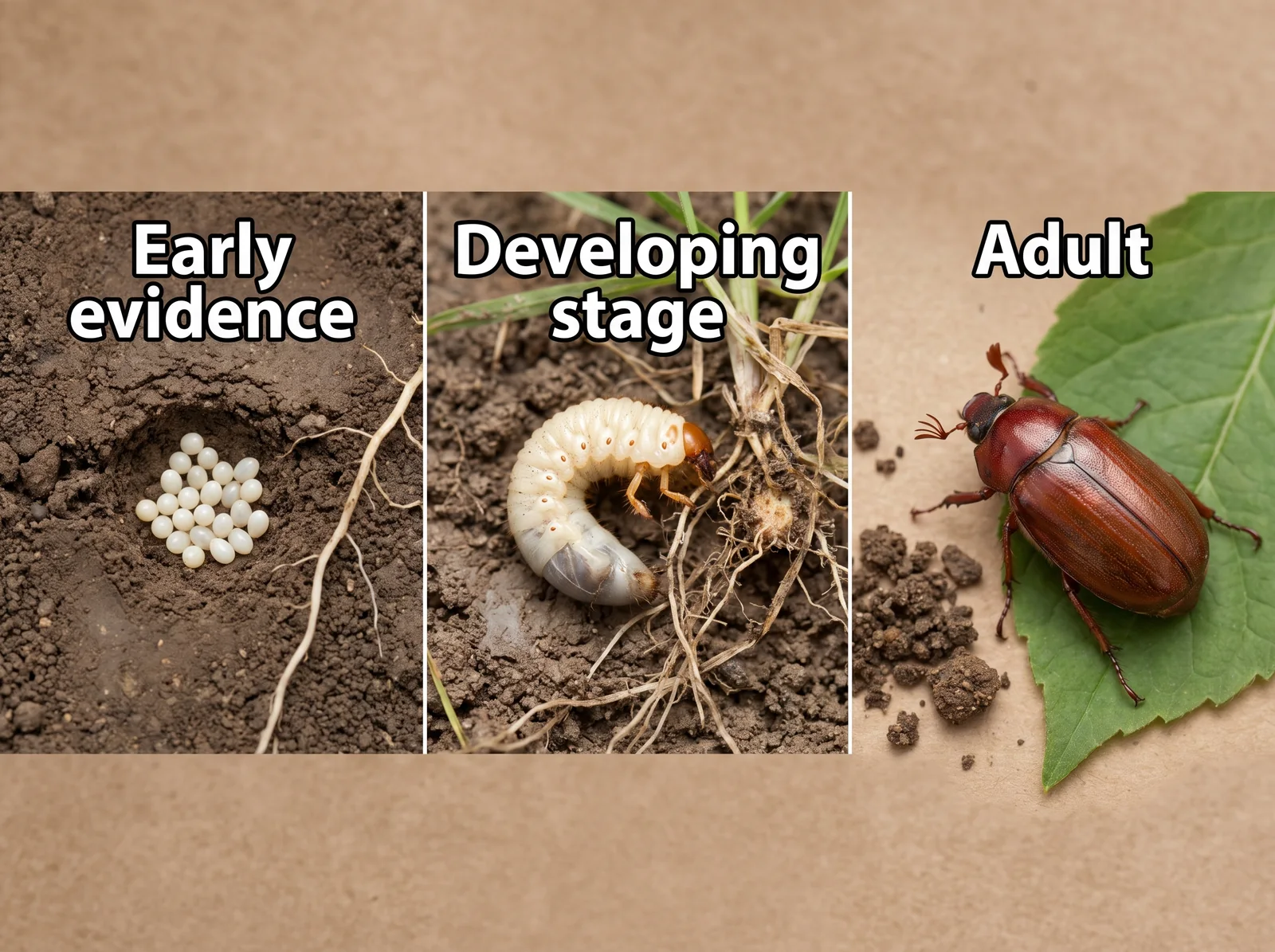
What do june beetle larvae look like in the soil?
June beetle larvae are creamy white, C-shaped grubs with distinct brown heads and three pairs of visible legs near the front of their bodies. They live underground and feed aggressively on the root systems of turfgrass, garden vegetables, and ornamental plants.
As these grubs grow, their rear ends often take on a dark, greyish-blue tint from the digested soil inside them. Mature grubs can reach over an inch in length before pupating into adult beetles. Finding one or two while planting flowers is normal, but dense clusters indicate a problem that needs attention.
- Creamy white, plump bodies curled into a tight C-shape.
- Shiny, rust-brown head capsules with strong chewing mandibles.
- Six distinct legs positioned directly behind the head.
How do you check your lawn for a grub infestation?
Lawn damage typically shows up in late summer or early fall as irregular brown patches that fail to green up after watering. Because the larvae eat the root zone, infested turf feels spongy underfoot and can easily be pulled up by hand, resembling a loose section of rug.
To confirm the presence of grubs, select a spot along the border of healthy and dying grass. Cut a one-square-foot square of sod about three inches deep, lift the layer back, and count the grubs resting in the soil and root thatch.
- Fewer than five grubs per square foot: Healthy turf can tolerate this level without treatment.
- Six to nine grubs per square foot: Monitor closely, especially if animals are digging.
- Ten or more grubs per square foot: Active management is needed to prevent severe lawn loss.
How does moisture management stop larvae development?
Adult june beetles look for moist, soft soil during midsummer to lay their eggs. If your lawn stays consistently damp during peak flight periods, you are creating an inviting nursery for the next generation of larvae.
Allowing your turf to dry out slightly during egg-laying weeks can cause many eggs and tiny new hatchlings to dry out and die naturally. Transition your sprinkler routine to deep, infrequent watering rather than short daily cycles.
Deep watering encourages grass roots to reach further down into the ground, making your lawn far more resilient against root damage caused by feeding grubs.
Can biological controls eliminate white grubs?
Beneficial nematodes are microscopic, soil-dwelling worms that seek out and kill june beetle larvae without harming earthworms, pets, or plants. The species *Heterorhabditis bacteriophora* is especially effective against white grubs.
Apply nematodes in late summer or early fall when young larvae are active near the surface. Water the lawn thoroughly before and after application to help these organisms travel downward through the thatch.
Milky spore powder is another biological option for specific grub species, though it takes several seasons to build up protective population levels in cooler soils.
How can you attract natural grub predators to your yard?
Many backyard birds enjoy feeding on beetle larvae and can naturally lower their numbers. Songbirds, robins, and starlings will readily pull grubs from loosened soil when you aerate or turn your garden beds.
You can welcome helpful wildlife by adding birdbaths, roosting boxes, and native shrubs around your property borders. Parasitic wasps and ground beetles also hunt larvae beneath the soil surface.
Be cautious with larger animals like skunks, raccoons, and armadillos. While they eat grubs, their aggressive digging can tear up healthy turf faster than the larvae themselves.
What cultural practices keep turf strong against root damage?
A thick, well-maintained lawn can withstand modest grub feeding without turning brown or dying. Keep your mower set to a height of three to four inches throughout the warm months.
Taller grass blades shade the ground, which slows soil moisture evaporation and promotes deeper root growth. Aerate compacted soil each autumn to improve drainage, loosen dense thatch, and disrupt grub tunneling.
Overseed thin patches with hardy grass varieties suited to your region. Dense root networks make it much harder for young larvae to establish feeding pockets.
When should you consider targeted treatments?
If monitoring reveals heavy grub densities that biological and cultural methods cannot manage, targeted soil applications may be necessary to protect your yard from widespread destruction.
Timing is critical for success. Treatments work best in mid-to-late summer when grubs are small, actively feeding near the surface, and vulnerable before they burrow deep underground for winter.
Always choose an EPA-registered product clearly labeled for white grubs in residential lawns. Read the entire product label carefully, follow all application instructions, and water the area as directed to move the material into the root zone.
Questions you may still have
How deep do june beetle larvae burrow during winter?
As soil temperatures drop in late autumn, june beetle larvae move downward past the frost line, often digging six to twelve inches beneath the surface. They become inactive throughout the winter, meaning surface treatments applied during cold weather will not reach or affect them.
Do june beetle larvae harm garden vegetables and flower beds?
Yes, grubs feed on the roots of many plants, including carrots, potatoes, strawberries, and ornamental perennials. In gardens, tilling the soil by hand in spring and late summer exposes larvae to birds and drying sun, drastically reducing their numbers before planting.
How long does a june beetle stay in the larval stage?
Depending on the specific species, june beetle larvae can spend anywhere from one to three full years living in the soil. During multi-year cycles, they cause the most severe root damage during their second summer when their body size and feeding appetite peak.