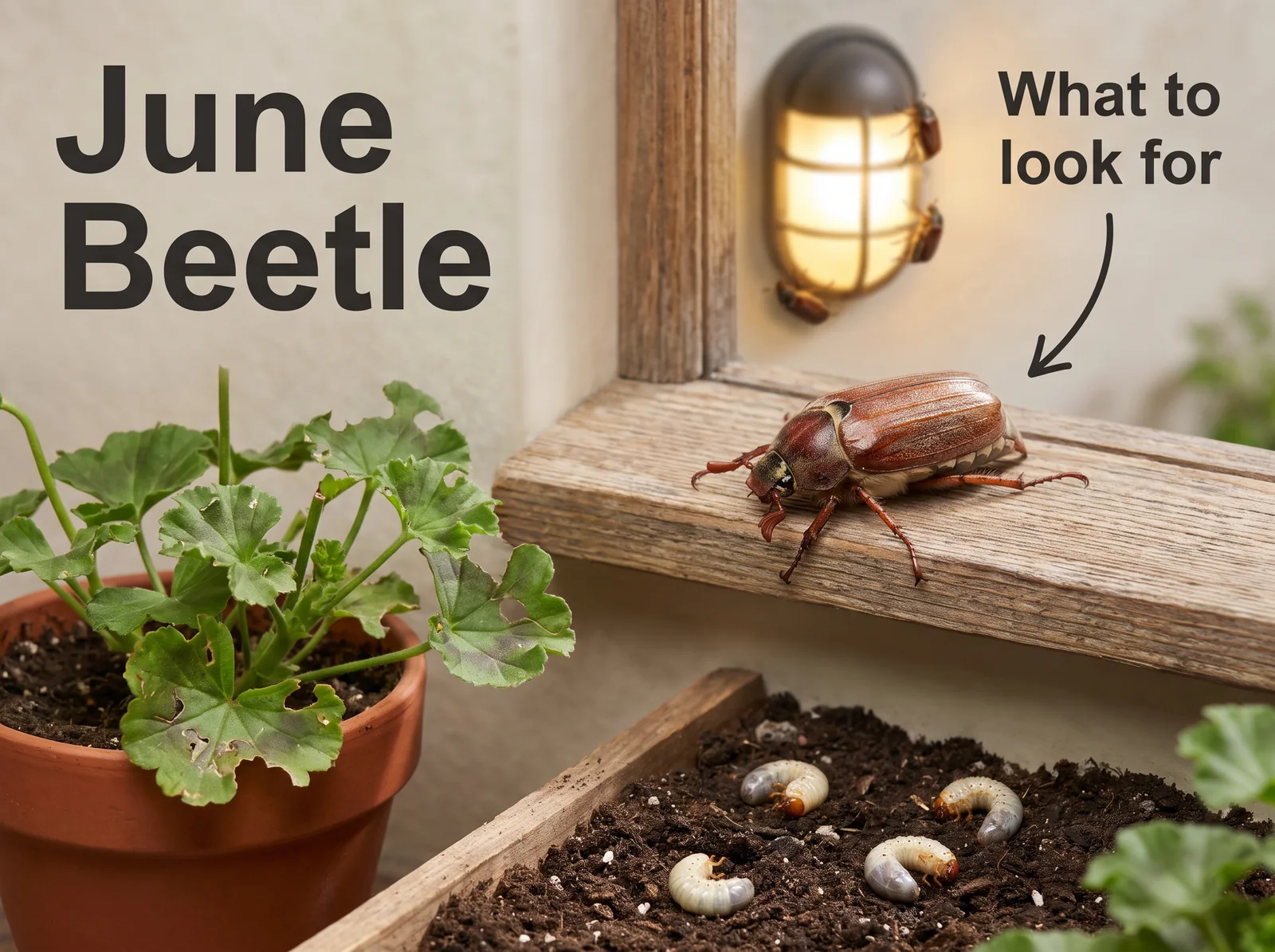
How do you identify green June beetles and their damage?
Green June beetles are large, heavy-bodied insects measuring nearly an inch long. You can easily spot them by their velvety green backs, bronze-tinted edges, and bright metallic green-and-gold undersides. Unlike common brown chafers that fly at night, adult green June beetles fly during bright, sunny days, producing a loud buzzing sound as they search for soft fruit, tree sap, and thin-skinned garden crops.
Damage shows up in two distinct ways across your yard. Adults feed in clusters on ripening figs, peaches, berries, and sweet corn, leaving gouged, fermenting fruit behind. Underground, their large white grubs feed mainly on decaying organic matter rather than living roots, but their vigorous burrowing loosens turfgrass, causing dead patches and soft, spongy soil.
How can you handpick adult beetles effectively?
Handpicking is one of the quickest ways to reduce adult numbers on garden fruit without introducing chemicals. In the early morning or late dusk, cooler temperatures make the beetles sluggish and slow to react. You can approach infested plants and gently shake branches or pluck the beetles directly off damaged fruit.
Drop the collected beetles straight into a bucket of warm water mixed with a few drops of liquid dish soap. The soapy water breaks the surface tension, causing the beetles to sink quickly and perish. Doing this daily during peak emergence in midsummer rapidly drops the local population before females begin laying eggs in your lawn.
What natural barriers protect your fruit crops?
Because adult green June beetles are attracted to the smell of ripening sugars, physical exclusion provides immediate defense. Covering fruit trees, berry patches, and vegetable beds with fine insect netting prevents adults from landing on your harvest while still allowing sunlight, air, and rain to pass through.
For individual fruit clusters or small backyard trees, you can use breathable mesh bags tied securely around developing fruit. Always inspect the netting regularly to ensure there are no small gaps where beetles can squeeze inside, and pick ripe fruit promptly so the sweet scent does not draw more pests to your garden.
- Install fine-mesh netting over berry bushes before fruits soften.
- Enclose prized fruit clusters in lightweight, reusable mesh bags.
- Harvest soft fruits early in the day as soon as they reach maturity.
How does compost management deter egg laying?
Female green June beetles seek out soil rich in decomposing organic matter to lay their eggs. Large compost piles, thick layers of fresh manure, and deep rotting mulch are prime targets. If your compost is exposed, adult females will readily burrow inside to deposit eggs throughout late summer.
You can discourage this behavior by keeping compost piles tightly covered with heavy tarps or building enclosed compost bins with solid lids. Turning your compost regularly generates internal heat, which destroys developing larvae and makes the environment far less hospitable for nesting adults.
Can beneficial nematodes manage the underground grubs?
Beneficial nematodes are microscopic roundworms that hunt and parasitize soil-dwelling grubs without harming earthworms, plants, pets, or people. Applying insect-parasitic species such as Heterorhabditis bacteriophora to your lawn targets the large grubs actively moving through the top layers of soil in late summer and early fall.
To ensure success, apply nematodes during overcast days or early evening, as direct ultraviolet sunlight can kill them quickly. Water your lawn thoroughly before and after application to help these organisms travel through the soil profile down to the root zone where the grubs burrow.
What lawn care practices make turf less hospitable?
Healthy, dense turfgrass naturally resists beetle pressure and prevents adults from easily penetrating the soil surface. Raising your mower blade to keep grass around three to four inches tall creates shade and thick root networks, making it difficult for adult females to push into the dirt to lay eggs.
You should also adjust your watering schedule. Adult beetles prefer moist, soft soil for burrowing. Allowing the top inch of soil to dry out between deep waterings during the midsummer egg-laying season makes your lawn far less attractive. Avoid heavy organic topdressings during July and August to limit food sources for young larvae.
How can you attract natural predators to your yard?
Encouraging natural predators helps keep green June beetle numbers low over the long term. Many common songbirds, such as blue jays, grackles, crows, and starlings, actively feed on both adult beetles and surfacing grubs. Installing birdbaths, roosting perches, and native flowering shrubs invites these winged helpers into your garden.
Certain parasitic insects also provide natural control. Scoliid wasps, for instance, naturally search out green June beetle grubs in lawns, burrow down into their tunnels, and parasitize them. Planting nectar-rich flowers like goldenrod, asters, and mint supports these beneficial wasps without creating aggressive behavior toward humans.
Questions you may still have
Are green June beetle grubs different from other lawn grubs?
Yes. Green June beetle grubs are noticeably larger than Japanese beetle grubs and have a unique habit of crawling on their backs using stiff bristles rather than their legs. They feed mostly on decaying organic debris rather than live grass roots, causing damage mainly through extensive burrowing.
Do adult green June beetles bite or sting people?
No, green June beetles cannot bite or sting. Although their large size, loud buzzing flight, and spiny legs can feel intimidating when they bump into you, they are entirely harmless to humans and household pets.
Can homemade bait traps help reduce adult populations?
Simple bucket traps containing fermenting fruit, fruit juice, or a mixture of water, sugar, and yeast can attract adult beetles away from crops. Place traps along yard perimeters rather than directly next to prized plants so you do not lure extra pests toward your harvest.