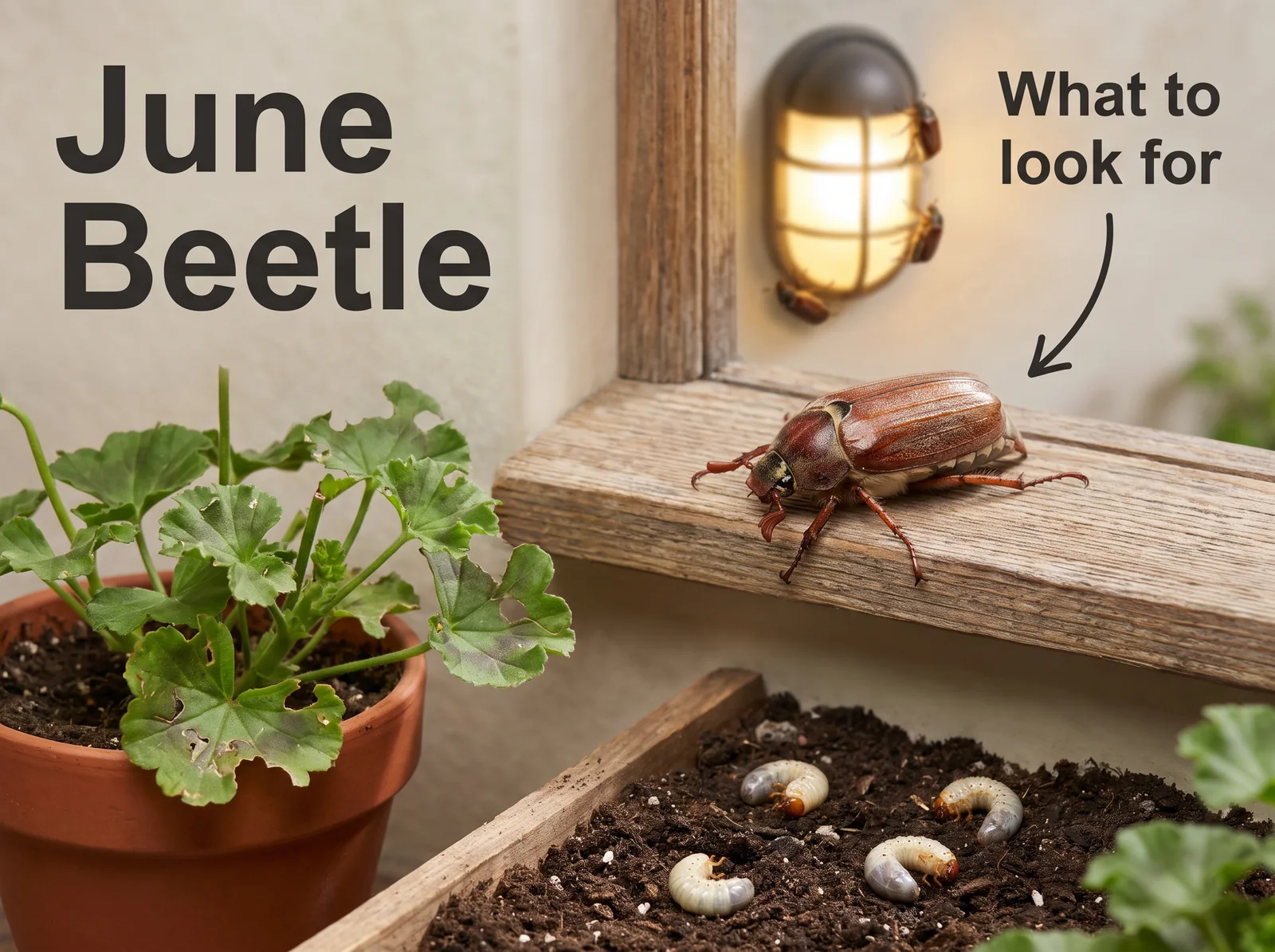
Why are june beetles attracted to your yard?
Adult june beetles emerge from the soil in late spring and early summer with two main goals: mating and finding food. They feed on the foliage of deciduous trees, shrubs, and garden perennials during the evening hours. If your yard features lush plant growth and soft, moist soil, female beetles view it as an ideal environment to lay their eggs.
Bright outdoor lighting is another major attractant. Porch lights, landscape spotlights, and bright window fixtures draw adult beetles from neighboring areas straight to your home. Once they arrive, they mate nearby and deposit dozens of eggs directly into your lawn.
- Deciduous trees like oaks, maples, and fruit trees that provide foliage
- Overwatered, damp turf that makes digging and egg-laying effortless
- Bright white security lights and decorative patio lamps left on after dusk
How does managing outdoor light reduce adult beetles?
Because adult june beetles are nocturnal and navigate toward light sources, adjusting your evening illumination is one of the easiest natural deterrents. Standard white incandescent and LED bulbs pull beetles toward your doors, windows, and exterior walls, where they drop into surrounding garden beds.
Switching outdoor fixtures to warm yellow bug lights or motion-activated sensors dramatically cuts down night activity. Drawing your indoor curtains after dark also prevents interior lighting from acting as a beacon. When you reduce night glare, fewer beetles gather around your foundation to lay eggs.
Can you remove june beetles by hand?
Hand-picking is a surprisingly effective method for protecting small trees, vegetable patches, and ornamental shrubs. Adult june beetles are clumsy fliers and move sluggishly, especially during early morning or late evening when air temperatures are cooler.
Take a bucket filled with warm water and a few drops of liquid dish soap out to your garden. Shake branches gently over the bucket or pluck the beetles directly off leaves and drop them into the soapy water. The soap breaks surface tension, causing the beetles to sink quickly. Regular collection keeps foliage damage to a minimum during peak flight weeks.
What simple traps help catch adult beetles?
You can construct simple, chemical-free traps to catch adult beetles before they feed and breed. A basic DIY trap uses a wide-mouth container or bucket placed directly beneath an outdoor light source. Suspend a low-voltage light over a bucket of soapy water; beetles flying toward the bulb bump into it and tumble into the water below.
Commercial light traps designed for night-flying insects also work well when positioned away from outdoor seating areas. Place these traps along the outer perimeter of your property so you draw flying adults away from your garden beds rather than toward your house.
How do you control the grub stage naturally?
True long-term control requires addressing white grubs living in your soil. These grubs hatch from eggs laid in mid-summer and chew on grass roots throughout late summer and autumn, creating spongy, dying patches of turf. Applying beneficial nematodes offers a proven biological solution.
Beneficial nematodes are microscopic roundworms that hunt down soil-dwelling grubs without harming earthworms, pets, or plants. Apply them during late summer when young grubs are actively feeding near the soil surface. Water your lawn thoroughly before and after application to help these organisms travel through the soil.
What lawn care practices discourage egg-laying?
Maintaining dense, healthy grass creates a natural barrier against egg-laying females. June beetles prefer laying eggs in thin, short, or stressed turf where accessing the soil is easy. Adjusting your mowing height to three inches or taller helps shade the soil surface and makes it harder for beetles to burrow.
Letting your lawn go naturally dormant or reducing irrigation during the peak mid-summer egg-laying window also helps. Female beetles seek out moist ground because their eggs need moisture to survive. Drier topsoil causes many eggs to dry out before they can hatch into destructive grubs.
- Mow at three inches or higher to create dense, tall turf canopy
- Aerate compacted soil in autumn to promote deep root growth
- Water deeply but infrequently rather than shallowly every day
How do natural predators help keep numbers down?
Encouraging natural wildlife in your yard provides continuous, chemical-free pest control. Many common backyard birds, including robins, blue jays, and crows, actively hunt both adult beetles and subsurface grubs. Adding a birdbath and planting native shrubs creates a welcoming habitat for these predators.
Small mammals, toads, and beneficial predatory wasps also feed on june beetle larvae and adults. Parasitic tiphiid wasps, for example, burrow into the soil to parasitize white grubs naturally. By avoiding broad-spectrum garden sprays, you preserve these helpful predators and maintain natural balance.
Questions you may still have
Do adult june beetles bite or sting humans?
No, adult june beetles do not bite, sting, or transmit diseases to humans or household pets. They have small spines on their legs that can feel prickly or cling to clothing and hair, which sometimes startles people, but they are entirely harmless to you.
How do I know if brown lawn patches are caused by grubs?
Grub damage usually appears in late summer as irregular brown patches that lift easily from the soil like a loose piece of carpet. Pull back a small square of damaged turf; seeing more than five to ten c-shaped white grubs per square foot indicates a problem.
Will milky spore eliminate june beetle grubs in my lawn?
Milky spore specifically targets Japanese beetle larvae and is generally ineffective against june beetle grubs, which belong to different scarab species. For june beetle larvae, beneficial nematodes or targeted soil aerations offer much more reliable natural suppression.