#1
Identify and Monitor Before Acting
Best for: Homeowners unsure if grubs or adult beetles are the actual problem
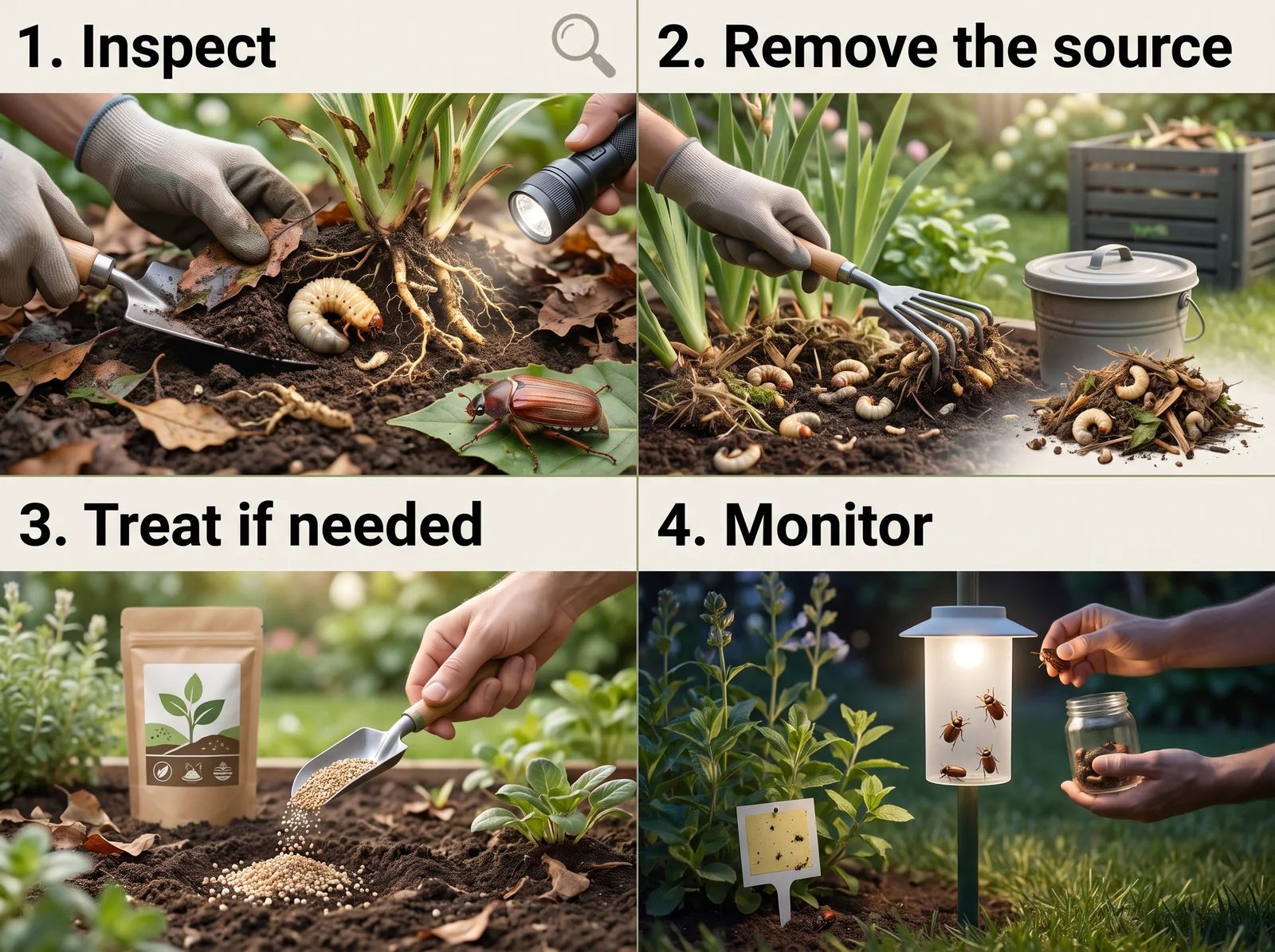
June beetle adults are the brown, clumsy flyers that bang into screen doors at dusk. Their larvae are white C-shaped grubs living an inch or two below your lawn's surface. Treating for the wrong stage wastes time and money, so confirm which one you're dealing with first.
Pull back a patch of turf in a damaged area and count grubs per square foot. A few grubs rarely cause visible harm. Large numbers, paired with brown patches that lift like carpet, point to a grub problem worth addressing.
Useful strengths
- Costs nothing
- Prevents unnecessary treatment
- Helps you time any later action correctly
Limits to consider
- Takes a bit of digging and patience
- Doesn't solve the problem by itself
#2
Reduce Outdoor Lighting That Attracts Adults
Best for: Households bothered by beetles swarming porches and windows at night
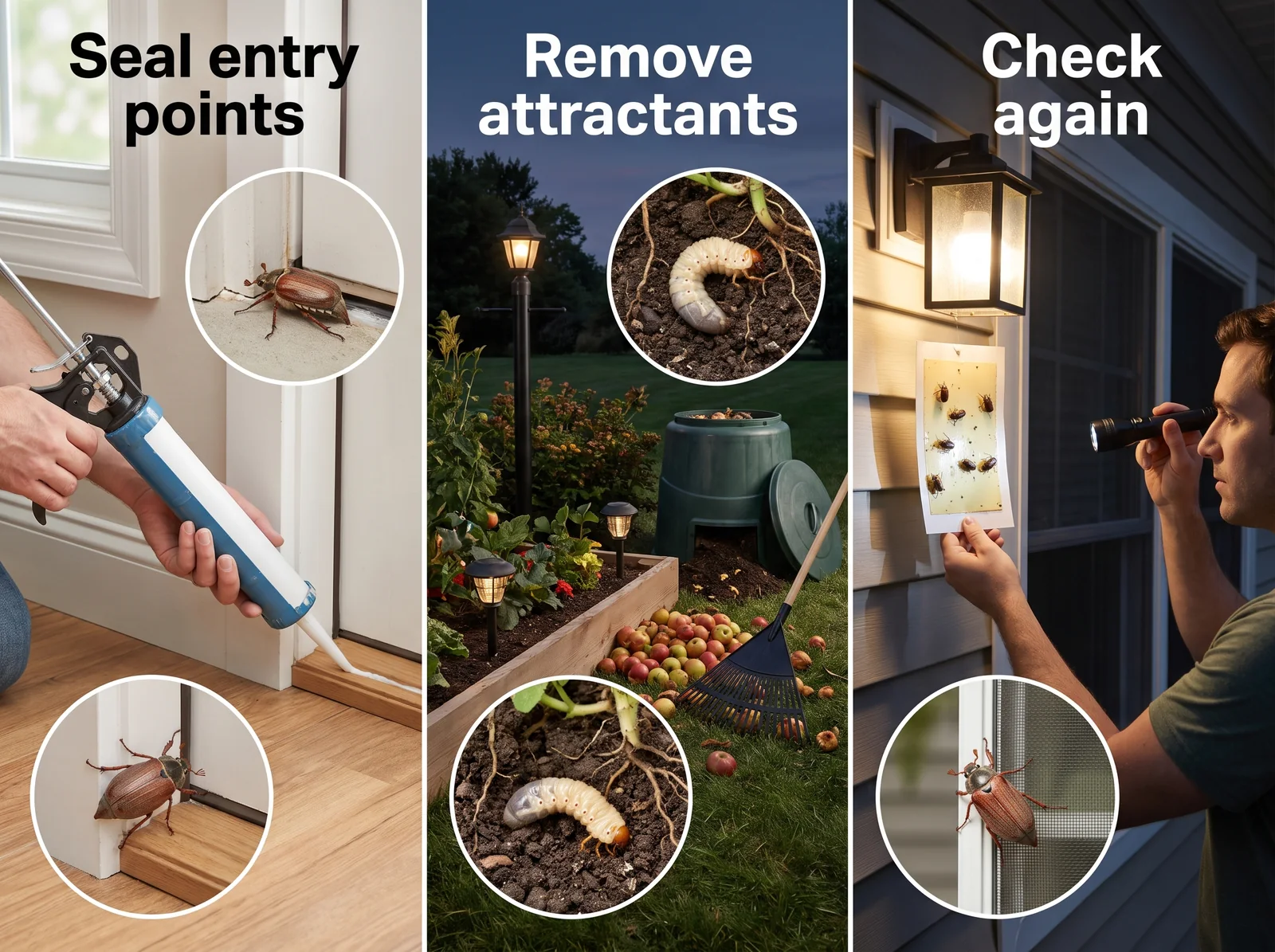
Adult June beetles are drawn to bright white and blue-toned light. Porch lights, garage lights, and uncovered bulbs near doors act like beacons on warm evenings, pulling beetles toward your house and sometimes indoors through open doors.
Switching to yellow "bug" bulbs, motion-sensor lighting, or simply turning off unnecessary exterior lights during peak beetle season cuts down how many show up at your entryways. It won't stop grubs in the soil, but it reduces the nightly nuisance.
Useful strengths
- Simple and immediate
- No cost beyond a bulb swap
- Reduces beetles entering the house
Limits to consider
- Doesn't affect the grub population underground
- Neighbors' lights can still draw beetles to your yard
#3
Adjust Lawn Watering Habits
Best for: Yards with a history of grub damage in well-watered turf
Female beetles lay eggs in moist soil, and adult beetles favor lawns that are watered often and heavily. Cutting back on frequent shallow watering during egg-laying season in early to midsummer makes your yard less inviting for new grubs.
Deep, infrequent watering supports healthy grass roots while making the topsoil less appealing for egg-laying. This is a long-term habitat change, not a fix for beetles or grubs already present, but it helps prevent the next generation from settling in heavily.
Useful strengths
- Supports overall lawn health
- Reduces future egg-laying
- No products needed
Limits to consider
- Won't remove existing grubs
- Takes a season or more to show effect
#4
Handpick and Remove Adult Beetles
Best for: Small yards or gardens with a manageable number of visible beetles
On summer evenings, adult beetles cluster near lights, screens, and low shrubs. Picking them off by hand into a bucket of soapy water is tedious but effective for small populations, especially right after they emerge.
This works best as a nightly habit for a week or two during peak emergence rather than a one-time effort. It won't touch the grubs underground, but it reduces the adults that could lay the next round of eggs in your lawn.
Useful strengths
- No cost
- Immediate visible results
- Safe for kids to help with
Limits to consider
- Time-consuming for larger populations
- Doesn't address grub stage
#5
Use Row Covers or Netting on Garden Plants
Best for: Vegetable and flower beds where adult beetles are feeding on leaves
Adult June beetles chew ragged holes in leaves of roses, grapes, and some vegetables. Lightweight row covers or fine netting placed over vulnerable plants during peak beetle activity physically blocks access without chemicals.
Remove covers during the day if plants need pollinator access, and only use them while beetles are actively feeding. This exclusion method protects specific plants rather than the whole yard, so prioritize your most valued plantings.
Useful strengths
- Chemical-free
- Protects specific high-value plants
- Reusable season to season
Limits to consider
- Impractical for large gardens or lawns
- Can interfere with pollinators if left on too long
#6
Apply Beneficial Nematodes to Soil
Best for: Lawns with confirmed grub damage where a biological option is preferred
Beneficial nematodes are microscopic organisms that seek out and infect grubs in the soil. They're applied by watering them into the lawn during the right soil temperature and moisture window, typically when grubs are young and active near the surface.
Timing and soil moisture matter more than most people expect. Nematodes need moist soil to survive and move, so watering before and after application improves results. They're a targeted option that avoids broad pesticide use.
Useful strengths
- Targets grubs specifically
- Low risk to pets, kids, and pollinators
- Fits organic lawn care programs
Limits to consider
- Needs precise timing and soil moisture
- Results vary and may take a season to show
- Short shelf life once purchased
#7
Set Up Light Traps for Monitoring or Reduction
Best for: Tracking beetle activity or reducing numbers near a specific structure
Light traps use a bulb and a collection container to draw in and capture adult beetles overnight. They're useful for figuring out how bad an infestation is before deciding whether more action is needed.
Placed away from doors and windows, a trap can also pull beetles away from your house rather than toward it. Traps reduce local adult numbers but won't eliminate a regional population moving through your area each summer.
Useful strengths
- Doubles as a monitoring tool
- Redirects beetles away from entry points
- No pesticide involved
Limits to consider
- Doesn't reduce grub populations
- Needs regular emptying and upkeep
#8
Use an EPA-Registered Pesticide Labeled for June Beetles or Grubs
Best for: Lawns or plantings with heavy, confirmed damage that other methods haven't controlled
When grub counts are high and turf damage is spreading, a pesticide product labeled specifically for white grubs or June beetles can be part of the plan. Choose only an EPA-registered product labeled for this pest and the site you're treating, whether that's lawn, garden bed, or ornamental planting.
Read the complete label before buying, not just the front panel. It tells you the right timing, application method, and how to keep children and pets off the treated area until it's safe. Skipping label steps is the most common reason treatments fail or cause unwanted exposure.
Useful strengths
- Can address heavy infestations other methods haven't controlled
- Products are formulated for specific grub or beetle life stages
- Widely available at garden and hardware stores
Limits to consider
- Requires strict label compliance
- Not selective for beneficial insects unless labeled otherwise
- Best used after non-chemical steps haven't worked
#9
Hire a Licensed Pest Control or Lawn Care Professional
Best for: Large-scale infestations, recurring damage, or when DIY steps haven't worked
A licensed professional can confirm grub density with proper sampling, time treatments to the beetle life cycle, and apply products under label guidelines with equipment suited for larger properties. This matters most when damage covers a wide area or keeps returning year after year.
Professionals also weigh factors like nearby water sources, pollinator activity, and soil type before recommending a plan. For serious or repeated infestations, this oversight often saves money compared to repeated DIY attempts that don't fully solve the problem.
Useful strengths
- Trained diagnosis and timing
- Access to professional-grade equipment
- Reduces guesswork on large properties
Limits to consider
- Costs more than DIY options
- Availability and pricing vary by region
Why do June beetles show up in my yard every summer?
June beetles have a life cycle that often spans one to three years, with adults emerging in late spring through midsummer to mate and lay eggs in soil. If your yard had grubs last year, it's common to see adults again this year as that cycle continues.
Lawns with consistent moisture and grass roots are especially attractive to egg-laying females. That's why yards that are watered often, or sit near turf-heavy parks and golf courses, tend to see repeat activity.
How much grub damage is actually a problem?
A small number of grubs, generally under five per square foot, rarely causes noticeable harm to an established lawn. Damage becomes visible when grub counts climb higher, showing up as irregular brown patches that peel back easily because the roots have been eaten away.
Before choosing a treatment, dig a few test patches in different areas of the lawn. This gives you a realistic picture of whether you're dealing with a minor presence or a infestation that justifies more active steps.
Can I prevent June beetles without using any pesticide?
Yes, for many yards. Adjusting watering habits, reducing attractive lighting, and using beneficial nematodes address both the adult and grub stages without chemical products. These steps work best when started before populations get large.
Pesticide use becomes more relevant when non-chemical methods haven't kept damage under control, or when an infestation is already severe. Even then, source removal and habitat changes remain useful alongside any product you choose.
Questions you may still have
Are June beetles harmful to people or pets?
June beetles don't bite, sting, or carry disease that affects people or pets. They're mostly a nuisance pest, bumping into windows and screens at night. The real damage comes from their grub stage feeding on grass roots and, occasionally, garden plant roots underground.
What's the difference between a June beetle and a June bug?
These names are typically used for the same insect. "June bug" and "June beetle" both commonly refer to large brown beetles in the genus Phyllophaga that emerge in late spring and early summer. Regional naming varies, but the biology and control approaches are the same.
When is the best time to treat for grubs?
Young grubs feeding near the soil surface in mid to late summer are the easiest target for both beneficial nematodes and labeled pesticide products. Treating too early or too late in the life cycle, when grubs are deeper in the soil, reduces effectiveness regardless of method.
Will planting fewer flowers stop adult beetles from visiting?
Adult June beetles feed on leaves of certain plants like roses and grapevines, but they're primarily drawn by light and suitable soil for egg-laying, not garden plant choices alone. Reducing outdoor lighting and adjusting watering has more impact on adult activity than changing your plant selection.