Are June beetles actively tracking you?
June beetles do not hunt humans, bite, or feed on blood. When one flies directly toward your head or lands on your shirt, it is not tracking your scent or picking a fight. These insects have notoriously poor navigation skills and rely heavily on visual cues to orient themselves after sunset.
To a beetle flying through the dark, you appear as a large silhouette moving in front of light sources. When they try to reach a porch light or adjust their flight path, they frequently miscalculate distances and crash straight into people, walls, and patio furniture.
How do outdoor lights draw them toward people?
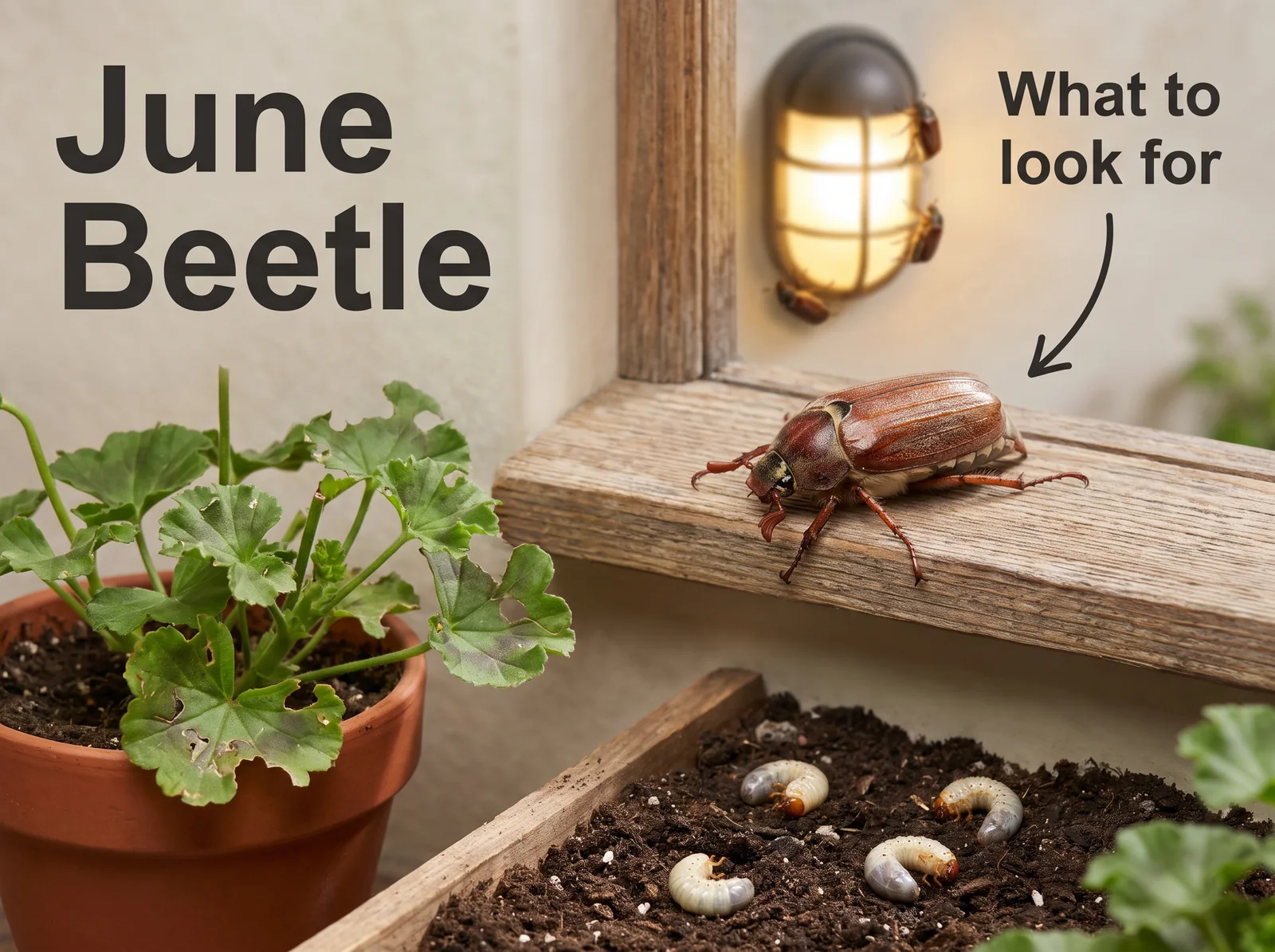
Artificial lighting is the biggest reason June beetles end up in your immediate space. Like many nocturnal insects, June beetles use natural moonlight and starlight to maintain their flight orientation. Bright artificial bulbs confuse their internal navigation, trapping them in disoriented flight patterns around the glow.
When you sit on a lit patio, walk under streetlights, or check your phone outside, you put yourself directly in their flight corridor. The beetles spiral around the fixture until they lose control, often bouncing off you before hitting the ground.
- Swap cool white porch bulbs for warm yellow or amber LED fixtures.
- Turn off decorative yard spotlights during peak summer flight periods.
- Angle exterior floodlights downward rather than across seating areas.
Does your clothing or body heat attract them?
Your visual contrast against the nighttime background plays a significant role in where beetles land. Light-colored clothing, such as white, beige, or bright pastels, reflects surrounding ambient light. To a disoriented insect, a reflective shirt can look like another light source worth investigating.
Body heat and the carbon dioxide you exhale also create a warm microclimate around you. While June beetles do not seek hosts the way mosquitoes do, the radiating warmth from your skin can make you a tempting resting perch once an exhausted beetle needs to stop flying.
Why do they get stuck in hair and on clothes?
Few things feel more startling than a beetle tangled in your hair, but this happens entirely by accident. June beetles possess spiny legs designed for gripping tree bark, leaves, and soil. When they collide with fabric or hair strands, their sharp tarsal claws snag automatically.
Once hooked, the beetle panics and flutters its heavy wings, which only tangles it further. Because their heavy bodies make quick takeoffs difficult, they struggle to release themselves immediately, making it seem like they are clinging to you on purpose.
When are June beetles most active around yards?
June beetle activity peaks during late spring and early summer, typically starting at dusk and lasting for several hours into the night. Adult beetles emerge from underground pupal stages to mate and feed on tree foliage, making their presence intense but relatively short-lived.
Warm, humid evenings following spring rains trigger the heaviest emergence. During these peak weeks, hundreds of adults may take flight simultaneously across a single neighborhood, significantly increasing the odds of clumsy collisions with anyone spending time outdoors.
How can you prevent them from bumping into you?
Managing your outdoor environment is the most reliable way to reduce unwanted beetle encounters. By shifting illumination away from sitting areas and managing lawn conditions, you draw the beetles away from where people gather in the evening.
Physical exclusion also keeps them from migrating from your patio into living spaces. Setting up gentle physical barriers allows you to enjoy warm summer nights without constantly batting away errant insects.
- Use shielded fixtures that direct light strictly toward walking paths.
- Keep window screens tight and patch small mesh tears promptly.
- Run an outdoor fan near your seating area to create a breeze beetles cannot fly through.
- Keep curtains drawn at night to block interior light from shining outside.
Do you need pesticides for adult June beetles?
Spraying adult June beetles around your patio or lawn is rarely necessary or effective. Adult flight periods last only a few weeks, and new beetles continuously fly in from surrounding properties, quickly replacing any that were treated.
Focusing on simple lighting changes, window maintenance, and outdoor fans provides immediate relief without chemical exposure. If grubs cause severe turf damage later in the season, consult cultural turf management practices or targeted lawn treatments rather than spraying flying adults.
Questions you may still have
Can June beetles bite, sting, or pinch your skin?
June beetles cannot bite or sting humans. Their mouthparts are built strictly for chewing tender leaves and plant matter. When a beetle lands on bare skin, its claws can feel sharp or prickly, which often feels like a pinch, but the insect is only trying to grip the surface.
Why do June beetles repeatedly crash into window glass?
June beetles fly toward indoor lighting visible through windows. Because glass is transparent, the beetles cannot see the physical barrier and attempt to reach the bulb inside. They will repeatedly flutter against the glass until they tire out or fall to the sill below.
How long will June beetles keep flying around my home?
Adult emergence typically lasts between three and five weeks in late spring and early summer. Once the mating and egg-laying period concludes, adult numbers drop rapidly. By mid-summer, adult flight activity largely stops as the insects complete their life cycle underground.