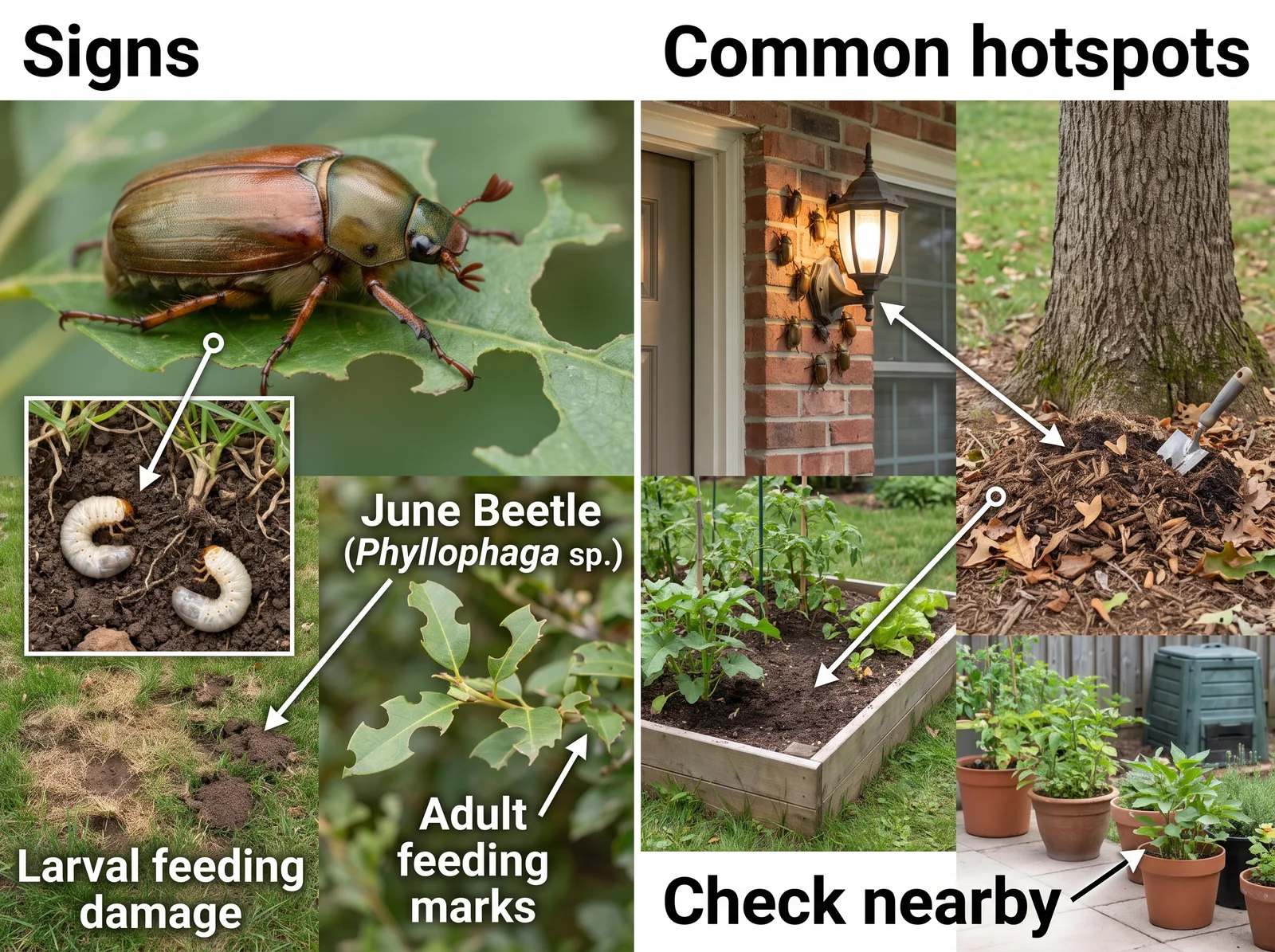
Why are June beetles attracted to outdoor lights?
Adult June beetles are nocturnal flyers that rely on moonlight to orient themselves during warm summer evenings. When you turn on bright porch lights, floodlights, or landscape fixtures, the insects mistake these artificial sources for natural light cues. They become disoriented, flying in frantic circles and repeatedly crashing into siding, windows, and illuminated screens.
Standard white incandescent and halogen bulbs emit wavelengths that are especially visible to night-flying beetles. Once the beetles arrive near the light source, they often drop onto your patio, crawl into cracks near entryways, or mate nearby before laying eggs directly into your lawn soil.
- Standard clear or white incandescent porch bulbs
- Bright LED security lights and floodlights
- Unshaded landscape accent lighting pointing upward
- Unscreened windows with bright interior lighting
What types of turfgrass and soil attract egg-laying adults?
Female June beetles look for specific ground conditions when they are ready to deposit their eggs. They heavily favor well-watered, lush turfgrass growing in loose, loamy soil. A lawn that receives frequent summer irrigation provides the ideal moisture level to keep their newly laid eggs from drying out before hatching.
Overly thick thatch layers also create a protected environment that shields the eggs and young larvae from natural ground predators. If your soil contains abundant decaying organic matter and dense grass root systems, adult females will target your yard over drier, compacted properties nearby.
- Consistently moist soil from frequent shallow watering
- Lawns with thick, unmanaged thatch layers
- Loose, sandy-loam soils that make burrowing easy
- Heavily fertilized grass with tender, active root growth
Which garden plants and trees do adult beetles prefer to eat?
While adult June beetles spend the day resting in sheltered soil or leaf litter, they emerge at dusk to feed on the foliage of broadleaf trees, ornamental shrubs, and garden crops. If your landscape features their preferred host plants, the feeding adults are far more likely to linger and multiply on your grounds.
They are particularly fond of the tender leaves found on fruit trees and common landscape shade trees. While healthy mature trees can typically tolerate minor leaf chewing, young saplings and ornamental shrubs can suffer noticeable foliage loss when large numbers of adults feed simultaneously.
- Oak, walnut, elm, and ash trees
- Fruit trees like apple, plum, and cherry
- Berry bushes and flowering garden roses
- Vegetable crops including corn, beans, and strawberries
How does grubs' diet keep June beetles returning every year?
The life cycle of the June beetle can span one to three years, mostly spent underground in the larval stage known as white grubs. These grubs feed aggressively on the root networks of turfgrass, weeds, and vegetable crops. A yard with an established grub population naturally produces a new batch of emerging adults each summer.
When grubs chew off root systems just beneath the surface, your grass loses its anchor and ability to absorb water. You might notice soft, spongy turf that pulls up like loose carpet. Because mature females often lay eggs near where they emerged, unmanaged grub activity guarantees a recurring cycle of beetle problems.
Can compost piles and mulch beds draw June beetles?
Certain species of June beetles, such as the green June beetle, are intensely attracted to decaying organic matter. Large compost heaps, decomposing grass clipping piles, and thick layers of damp bark mulch provide both shelter for adults and rich feeding grounds for their larvae.
When compost piles are left unmanaged or overly wet, the fermentation and warmth create an irresistible environment for females looking to bury their eggs. Turning your compost regularly to promote high core temperatures and keeping mulch layers moderate in thickness helps discourage beetles from using these garden beds as breeding sites.
How can you reduce the features that attract June beetles?
Discouraging June beetles starts with eliminating the visual and environmental triggers that bring them to your yard. Swap out bright white outdoor bulbs for warm yellow bug lights or motion-activated fixtures that only illuminate when necessary. Keep window blinds drawn during peak evening flight periods to avoid creating illuminated flight paths toward your home.
Adjust your lawn care routine to make the turf less hospitable for egg deposition. Water your lawn deeply and infrequently rather than providing light daily moisture. Allow your grass to grow slightly taller during the summer flight season, and aerate compacted areas to prevent thick thatch accumulation from trapping excess surface moisture.
Questions you may still have
What time of year are June beetles most active around lights?
Adult June beetles typically emerge in late spring and remain most active through early summer, generally from May through July depending on your climate. They take flight shortly after dusk on warm, humid evenings to feed, mate, and search for suitable egg-laying sites in nearby soil.
Do June beetles bite people or damage indoor furniture?
June beetles do not bite, sting, or carry diseases, and they cannot damage indoor furniture, carpets, or structural wood. When they fly through open doors or windows, they are simply lost and attracted to interior lighting. They typically dehydrate and die within a few days indoors.
Can overwatering your lawn increase June beetle infestations?
Yes, excessive watering creates the moist soil conditions that female June beetles actively look for when laying eggs. Moist soil keeps the eggs hydrated and ensures newly hatched grubs have soft, tender root tissue to eat. Deep, infrequent irrigation helps deter egg survival while keeping turf strong.