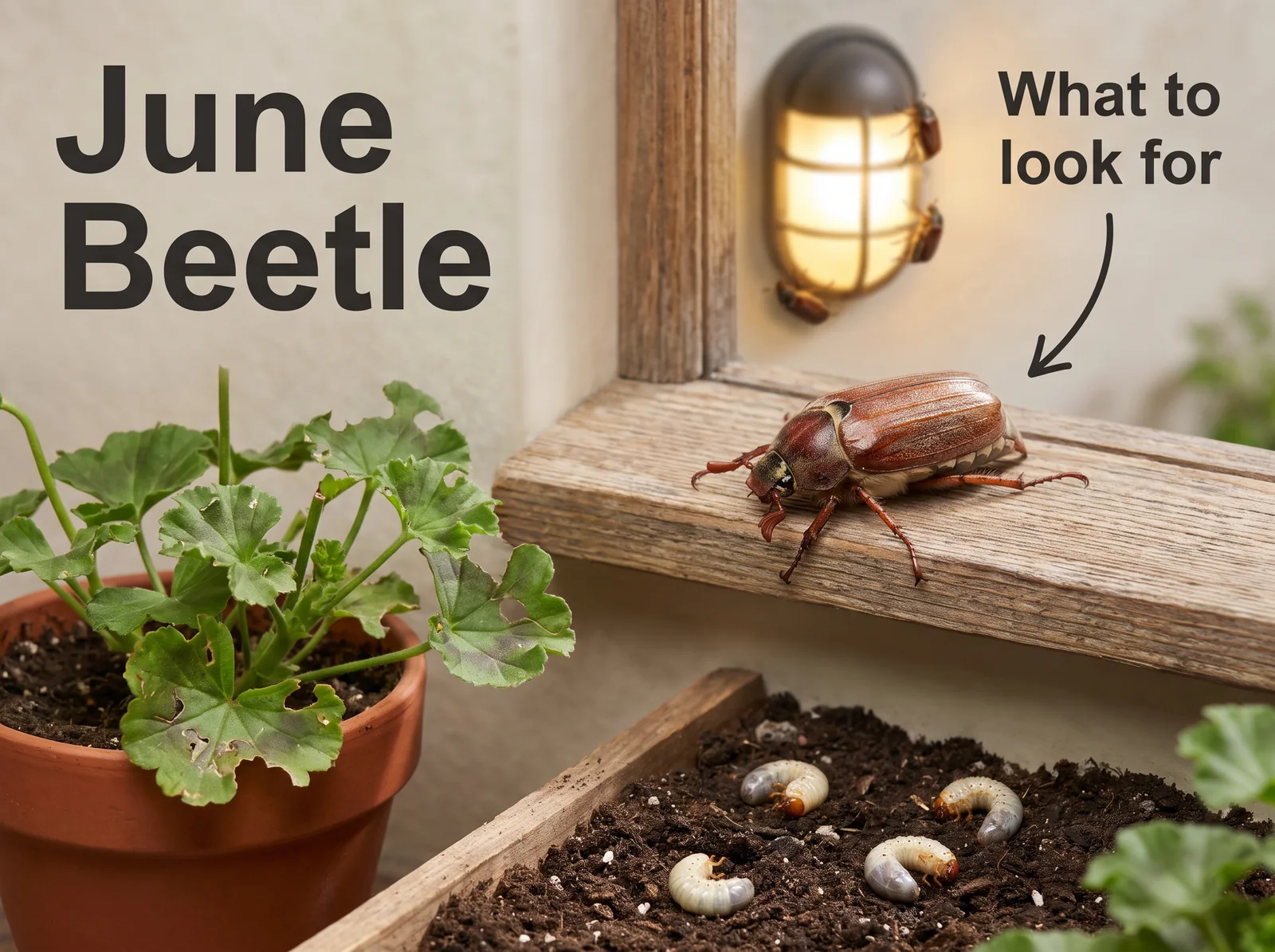
Why are june beetles attracted to your yard?
Adult june beetles emerge from the soil in late spring to mate and feed. They are strongly drawn to bright artificial lights on patios, walkways, and siding. Once they reach your home, they often stay nearby to feast on tree leaves, ornamental shrubs, and vegetable plants.
Females also seek out soft, moist, cut-short turf to lay their eggs. If your lawn stays damp and brightly lit all evening, it creates the ideal habitat for emerging beetles to gather and start the next generation.
- Bright white, fluorescent, or blue exterior lighting
- Overwatered, closely mowed grass that offers easy digging for egg laying
- Broadleaf trees and flowering garden crops that provide abundant food
How does changing outdoor lighting keep beetles away?
Because adult june beetles navigate by moonlight, standard white and bluish outdoor bulbs confuse them and pull them straight to your windows and doors. Changing your lighting setup is one of the quickest ways to deter june beetles from landing on your house.
Replace standard exterior bulbs with warm-yellow LED bug lights or amber fixtures. These wavelengths are much harder for beetles to detect, meaning fewer insects will congregate around your doorways or bang against window screens after dark.
You can also install motion sensors or timers so security lights run only when needed. Drawing window shades at sunset stops indoor light from leaking outside and luring beetles toward your home.
What physical barriers protect garden plants?
June beetles chew ragged holes in the leaves of roses, fruit trees, and garden vegetables. If you have specific plants they target each June, setting up physical exclusion barriers provides immediate protection.
Drape lightweight floating row covers or fine insect netting over vulnerable garden beds and small shrubs. Secure the edges at ground level with landscape staples, soil, or stones so beetles cannot crawl beneath the fabric during their nighttime feeding flights.
- Install fine mesh row covers before the adult flight season begins
- Inspect window and door screens for small tears and repair them promptly
- Place protective netting over fruit bushes as soon as foliage emerges
How does lawn maintenance deter egg laying?
Female june beetles prefer laying eggs in thin, short grass where soil access is easy. Keeping your lawn thick and robust creates a dense root layer that discourages females from burrowing into the ground to deposit eggs.
Raise your mower blade so your grass stays at three to four inches tall during early summer. Taller grass shades the soil surface, keeps it cooler, and makes it physically harder for beetles to reach the dirt.
Cut back on evening watering during the peak flight season. Female beetles look for damp soil to lay eggs, so allowing the top inch of soil to stay dry in June discourages them from choosing your yard.
Can natural predators help reduce beetle numbers?
Encouraging local wildlife is a dependable, hands-off way to keep beetle populations low. Many native birds, bats, and small mammals actively hunt adult beetles at dusk and dig for grubs during the day.
Install birdhouses, birdbaths, and bat boxes around your property perimeter to invite natural hunters. Songbirds such as robins, blue jays, and starlings consume large numbers of adult beetles right off your plants.
Frogs, toads, and beneficial ground beetles also feed on these pests. Maintaining a varied landscape with native flowering plants helps support these helpful predators throughout the season.
When should you handpick or trap adult beetles?
If you notice only a moderate number of beetles chewing on a few garden plants, handpicking is a fast and chemical-free deterrent. Adult beetles are clumsy flyers and move slowly in the early morning when temperatures are cool.
Walk your garden at dawn with a bucket of soapy water. Shake the affected branches gently or pick the beetles off by hand, dropping them straight into the water to drown.
Simple soapy water light traps placed away from your main living areas can also catch adults at night. Avoid commercial pheromone traps, as they tend to attract far more beetles from the surrounding neighborhood into your yard than they actually catch.
What if beetle pressure remains high?
When physical barriers, lighting adjustments, and lawn care practices are not enough to manage heavy activity, you may need targeted intervention. Long-term deterrence often requires addressing the white grubs living in the soil before they transform into flying adults.
If you choose to use an insecticide, select only an EPA-registered product clearly labeled for your target pest and application site. Read and follow the entire product label, including personal protective equipment guidelines and application timing, to ensure safe and effective use.
Questions you may still have
Do june beetles bite or sting people?
June beetles cannot bite or sting humans or pets. They lack venom and their mouthparts are built strictly for chewing plant material. However, their legs have tiny, sharp spines designed for gripping leaves and bark, which can feel like a scratch or pinch if one lands on your bare skin.
What is the difference between green june beetles and brown june bugs?
Brown june beetles belong to the genus Phyllophaga, fly mostly at night, and are strongly drawn to porch lights. Green june beetles belong to Cotinis nitida, are active during bright daylight hours, and are attracted to ripe or decaying fruit rather than outdoor light fixtures.
Does milky spore help deter june beetles?
Milky spore specifically targets Japanese beetle grubs and does not reliably control common june beetle grubs. If you want a biological control for june beetle grubs in your soil, beneficial nematodes such as Heterorhabditis bacteriophora are generally a much more effective option.